The Koran and politics of purdah
Account subscription benefits alongside Premium Stories, Editorials, Opinions and more. Unlock these with Subscription
R ecently, Kanthapuram A.P. Aboobacker Musliar of the Samastha Kerala Jamiyyathul Ulama issued a circular directing public halls and madrasas not to permit women to share public spaces with unrelated men during religious events.
He subsequently sought to justify the restriction with the startling claim that bringing women onto public platforms would cause “great destruction.” He attributed this danger to the mixing of men and women and said that the Koran itself requires women to remain confined to their homes and prohibits them from appearing in public.
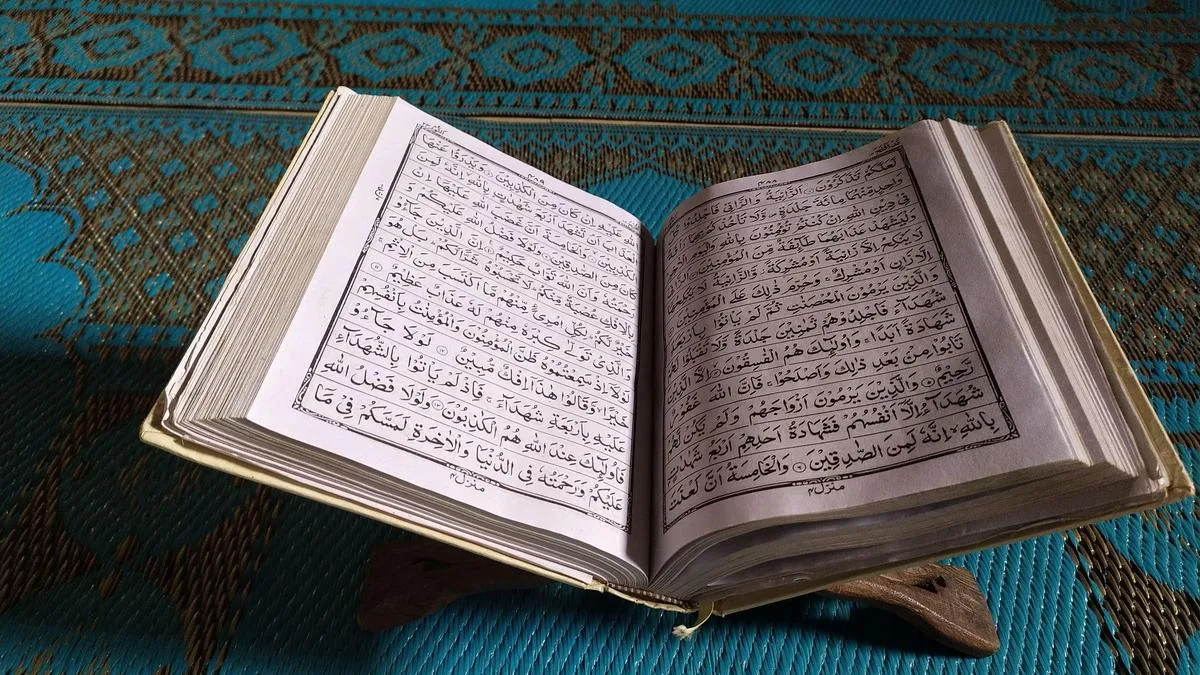
But the Koran does not instruct women to remain confined to their homes. It is conservative clerics who have historically sought to impose such restrictions by taking out of context the instruction in verse 33:33 to “stay in your houses” ( qarna fi buyootikunna ) and “do not display yourselves as was the display of the former times of ignorance.”
Kanthapuram says will defend Shariat laws no matter whoever opposes it
Kanthapuram calls for restraint amid protests over remarks on women’s participation
CPI(M) general secretary M.A. Baby slams Islamic scholar Kanthapuram’s anti-women remarks
Row over Kanthapuram directive limiting women’s public participation grows as Samastha defends ‘right to preach’
Yet the verse occurs within a passage beginning at verse 28 that is explicitly addressed to the Prophet’s wives wherein the Prophet is instructed to give them a choice: they may seek the comforts and adornments of worldly life, in which case they will be granted a gracious separation, or they may choose Allah, the Prophet and the hereafter, for which they will receive a great reward. Their position is then expressly distinguished from that of other women. “O wives of the Prophet, you are not like other women,” verse 32 says, before laying down a heightened standard of conduct for them: the punishment for serious wrongdoing would be doubled, while the reward for righteousness would also be doubled.
The Prophet’s wives are then told to avoid overly soft speech with men, to remain in their houses, not to display themselves as women did in the pre-Islamic period, and to follow Allah and the Prophet. The passage culminates in a reference intended to keep the Prophet’s household spiritually pure.
As is clear from the passage itself, the command to “remain in your houses” is addressed to women whom the Koran explicitly distinguishes from other women saying “you are not like other women.” To remove this instruction from its specific context and present it as a universal Koranic command requiring all Muslim women to remain at home is to extend the verse beyond the scope stated in the passage itself.
Moreover, the historical record does not support the idea that Islam required women to be confined to their homes or excluded from public life. Hazrat Khadija, the Prophet’s first wife, was a successful merchant who conducted her own commercial affairs, and the Prophet himself worked for her as a trading agent before their marriage.
5News aggregated this summary from the outlet’s public feed. The full article, with all the context, is on www.thehindu.com — the content belongs to The Hindu.