10 years of UPI: Towards new frontiers for digital payments | Explained
Account subscription benefits alongside Premium Stories, Editorials, Opinions and more. Unlock these with Subscription
UPI now has over 700 lenders, daily processing about 66 crore transactions — a milestone recognised by the International Monetary Fund (IMF). | Photo Credit: Allen Egenuse J.
The Unified Payments Interface (UPI), celebrating its tenth anniversary in August this year, is unique in many ways as it democratised technology, altered consumers spending behaviour and elevated India’s position from a consumer of global payment technologies to an exporter of digital public infrastructure.
Launched in 2016 with 21 banks, UPI is an open-access platform built by National Payments Corporation of India (NPCI). It now has over 700 lenders, daily processing about 66 crore transactions — a milestone recognised by the International Monetary Fund (IMF).
An ACI Worldwide report said India accounted for 129.3 billion real-time payment transactions or 49% of global volume, followed by Brazil with 37.4 billion transactions (14%), Thailand with 20.4 billion (8%), China with 17.2 billion (6%) and South Korea with 9.1 billion (3%).
Faster penetration of affordable smartphones and Internet, Aadhaar-based identity framework, and the government’s push to digital payments created a perfect environment for the exponential growth of UPI, making it a volume giant.
However, it is not yet a value goliath. Officials, directly and indirectly, view that a platform handling trillions of rupees annually cannot depend indefinitely on a zero-cost model.
Annual UPI transactions scaled from just 1.78 crore in FY17 to more than 24,162 crore in FY26 — nearly a 13,000-fold jump. Value expanded from ₹0.07 lakh crore to around ₹314 lakh crore during the same period.
Retail payments accounted for about 81% UPI’s transactions by volume in FY25, but constitued mere 9–10% of total value, while systems like RTGS dominate large-value transfers.
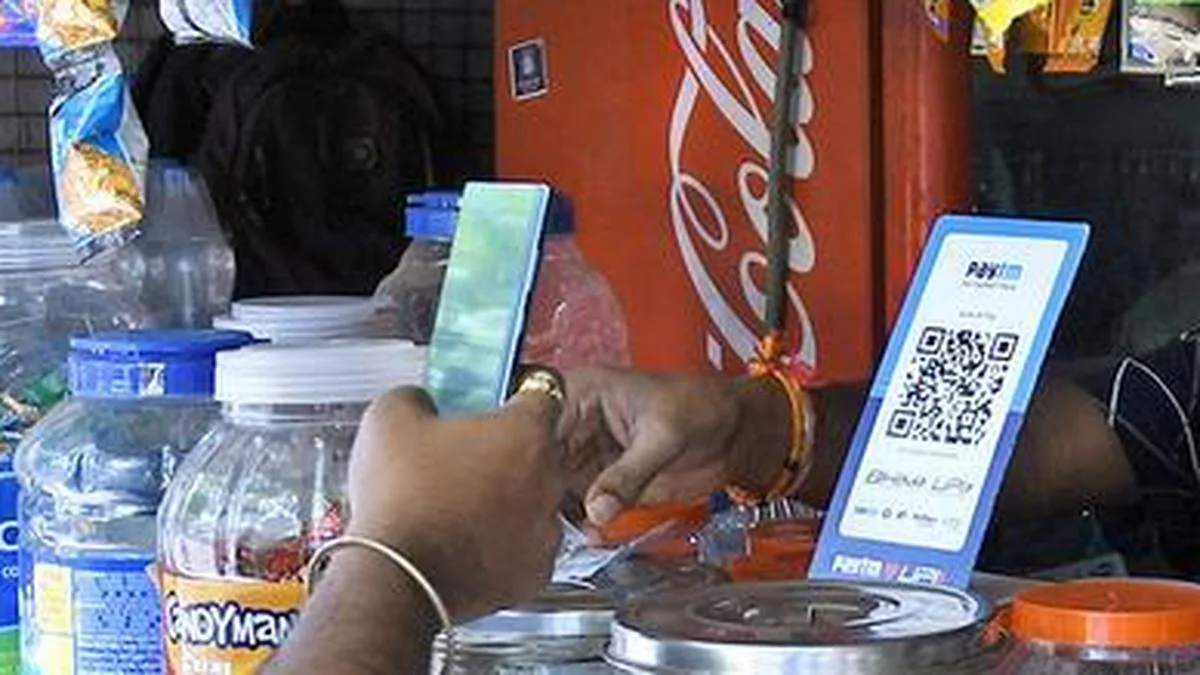
Displaying financial inclusion, anybody from a street hawker or a small merchant to auto drivers with a QR code can now accept digital payments without investing in expensive point-of-sale infrastructure. Simultaneously, the reduced transaction costs and expanded customer engagement also forced banks to rethink their traditional payment revenue models.
Brazil’s Pix is the closest comparison to UPI. Meanwhile, China’s digital payment revolution was driven mainly by private technology platforms — Ant Group’s Alipay and Tencent’s WeChat Pay.
The U.S. payments ecosystem remains dominated by card networks such as Visa and Mastercard, along with bank-based systems like ACH. The United Kingdom has Faster Payments, while Singapore has PayNow.
Although UPI leads in transaction volume, global acceptance and merchant integration are the areas where global networks have an advantage.
Reflecting immense strategic significance, the payment infrastructure is fast becoming a key component of economic diplomacy.
5News aggregated this summary from the outlet’s public feed. The full article, with all the context, is on www.thehindu.com — the content belongs to The Hindu.