Can you make payments without internet connectivity? RBI’s offline e-rupee initiative explained
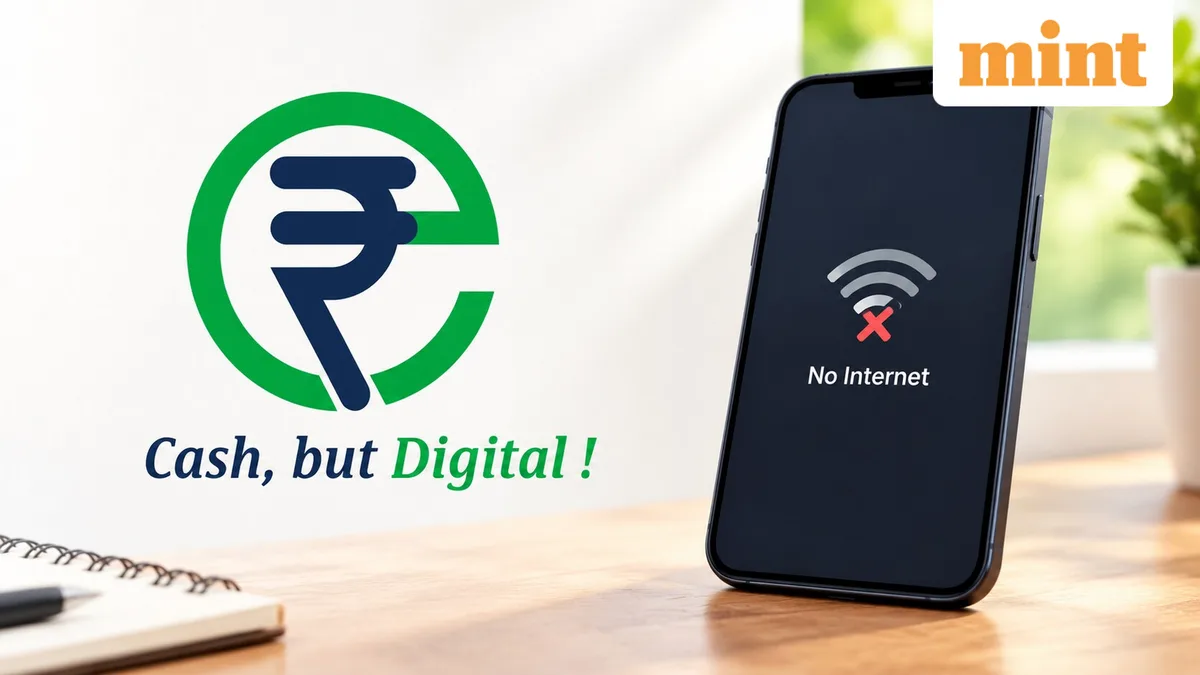
Payments could work even without an internet connection in the near future, as the Reserve Bank of India (RBI) is exploring a new initiative that would enable offline e-rupee transactions using technologies such as Bluetooth and near-field communication (NFC).
In a recent X post, the central bank said: “What if you could make payments - even without internet connectivity? Through HaRBInger, RBI is encouraging innovations that reimagine the possibilities of digital payments, such as enabling offline e ₹ transactions using Bluetooth and NFC. Because the future of payments should work everywhere, in every situation.”
The RBI's statement highlights the role of its HaRBInger initiative in encouraging innovation in digital payments , particularly in situations where transactions need to be made in remote areas with limited internet connectivity or in regions with generally low bandwidth.
The digital rupee, or e ₹ , is issued by the RBI and can be used to make payments, much like cash. It also offers features similar to physical currency, including ease of use, RBI guarantee, and finality of settlement.
The offline feature of e ₹ allows users to make transactions in locations with limited or no internet connectivity. It is expected to mirror the advantages of physical cash, according to the RBI's FAQ section dedicated to digital currency.
The RBI also says that different solutions are currently being explored. One solution facilitates transactions without internet but still requires telecom connectivity, while another solution facilitates transactions leveraging NFC communication on merchant POS terminals.
Explaining how the digital rupee is different from UPI , the RBI's FAQ section states that “e ₹ is a digital form of ₹ , whereas UPI is a means of payment.”
Users can hold the digital currency in an e-rupee wallet after withdrawing it from their bank accounts. For payments between e-rupee wallets via a central bank digital currency (CBDC) QR code, the transaction occurs directly between the wallets. It does not pass through the users’ bank accounts.
An e-rupee app can also be used to scan a UPI QR code. In such cases, the payment follows the same UPI process currently in place.
An individual can start using the e ₹ wallet by downloading the e ₹ app from the Play Store or the App Store and by following the App instructions, according to the RBI's FAQs.
Further, detailed instructions on using the e ₹ wallet can be checked with the banks and non-banks providing the wallet. Payments to merchants can be made by scanning either the CBDC QR code or the UPI QR code available at the respective merchant location.
The RBI has not announced a launch date for the offline e ₹ feature.
5News aggregated this summary from the outlet’s public feed. The full article, with all the context, is on www.livemint.com — the content belongs to LiveMint - Money.