What happens when the last person who knows the recipe is gone?
Account subscription benefits alongside Premium Stories, Editorials, Opinions and more. Unlock these with Subscription
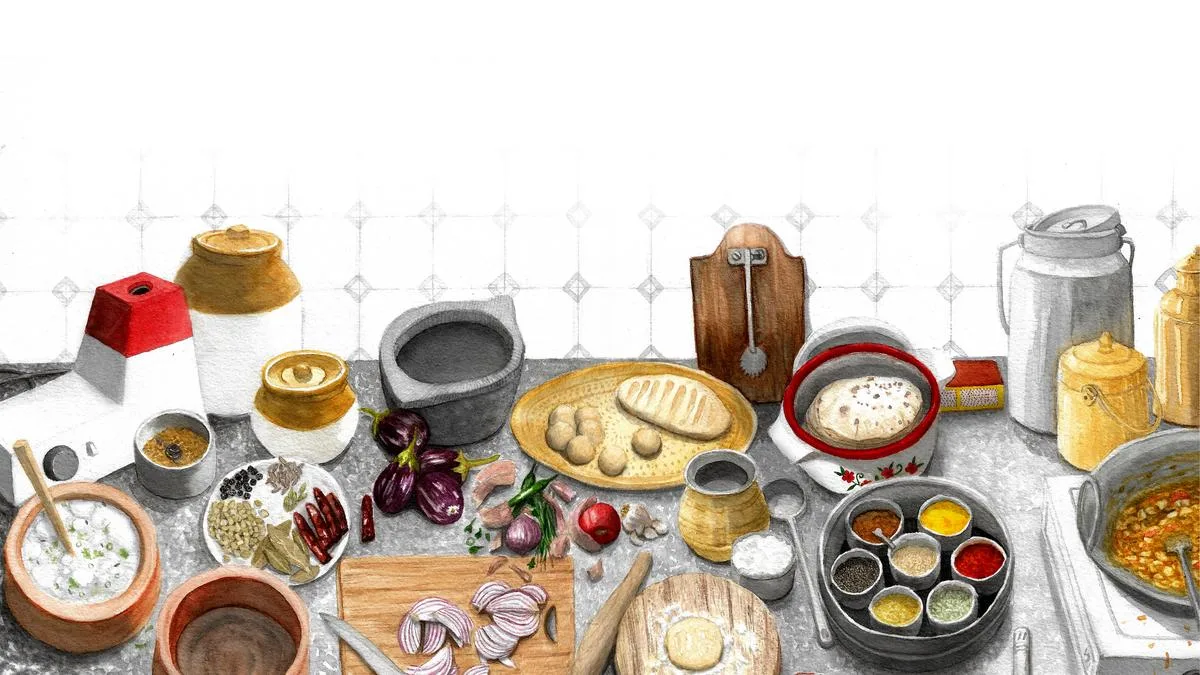
An illustration from Nivaala’s recipe journal | Photo Credit: Shawn D’Souza
Growing up, I vividly recall my paternal grandmother making seviyan by hand. In a matter of minutes, the simple dough made with refined flour and water would turn into fine, thread-like strands of vermicelli. She would fill paraats (large, shallow steel platters) with them and lay them across the hall, left to dry under the slow turn of the fan.
These delicate strands would go into her much-loved dessert, meethi ( sweet) seviyan . Years after she passed, my mother preserved a few boxes of these handmade treasures in the freezer, then used them to recreate her dish one last time. No one in the family had learnt the art from her, and thus we have never eaten meethi seviyan with handmade vermicelli again.
Read more | ‘Salt: A World History’ and seven other food history books you should read
Meethi seviyan made with roasted vermicelli, sugar, ghee, and dried fruits
In an online interview, culinary anthropologist Kurush Dalal once said, “Food is all about memories one has made, is making, or will make”. Like the meethi seviyan , these culinary memories have become central to many families and have extended into the food experiences we share outside our family tables.
A community potluck spotlights heirloom dishes; dining out is slowly turning intimate, with immersive, story-driven meals around the Partition, for instance; and documenting culinary traditions through cookbooks and podcasts has become something families are taking note of.
Is this growing interest in nostalgia-driven culinary experiences a passing trend, or does it reflect our society’s desire to reconnect with its roots? “People are growing up now and realising food is much more than what we eat; it is a strong mnemonic,” says Mumbai-based Kurush, an archaeologist and historian.
Read more | The Orissan tells the story of Odisha through history, culture, and food
Given that larger family units were common in India, he candidly admits that “sadly the onus was on women to be the custodians of our food history”. “Men entered this space only in the last 10 years, and the rise in nuclear families has led to people missing their family food and therefore learning how to make these traditional dishes. They look for recipes and cook them more often.”
Kurush, who also runs Katy’s Kitchen and caters Parsi cuisine across Maximum City, adds, “We’ve had Parsi NRI clients visiting India often asking for dishes that aren’t common today, such as chora ma paya (trotters cooked with black eyed peas), vaal (bitter beans), and masoor ma jeebh (goat tongue cooked with whole masoor dal),” he says.
Read more | The rise of queer food books in India: how kitchens shape identity and belonging
When asked for his fondest childhood food memories, Kurush returns to his maternal grandmother’s stewed apples, made only when a child was unwell. “Belonging to a middle-class family meant apples were not common at the table and were bought only when we were sick.
5News aggregated this summary from the outlet’s public feed. The full article, with all the context, is on www.thehindu.com — the content belongs to The Hindu.