My night trapped in Nagoya’s flood: what do you do when Japan’s trains shut down?
Here is essential advice for surviving sudden disaster in Japan.
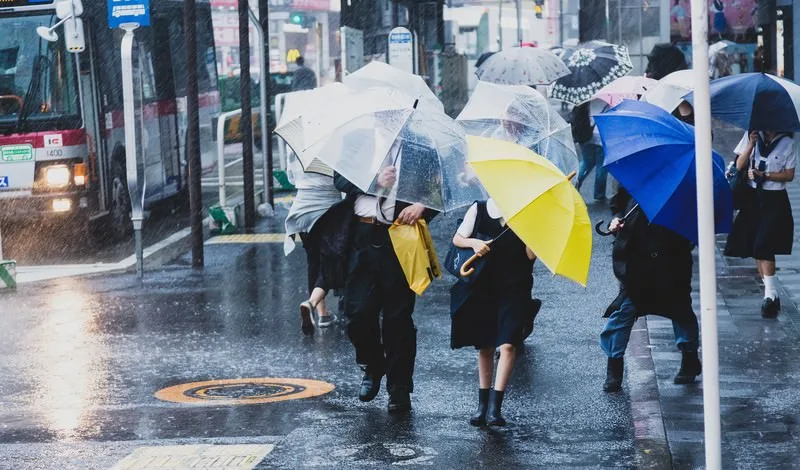
On September 8, 2026 , the regions of Chubu, the center of Japan, were struck by an aggressive autumn front that unleashed a sudden and immense downpour , resulting in one of the highest levels of rain the area has seen since records began.
The streets of Nagoya and railways became rivers , and the subway stations became pools, halting any and all public transport, leaving commuters and travelers stranded with no way to return home.
Thankfully, there were only minimal injuries and no fatalities .
Now, for those that may not have already guessed from my love of red miso , this is where I live and work , so I was personally affected by this upheaval.
When I am not sequestering myself with my computer to write articles about dancing on noodles and crabs being used for burglaries , I engage in more traditional work and commuting.
At 4:13 p.m. , my phone started beeping at me, which in Japan is usually a sign of impending earthquakes, so preparing myself to take protective measures, I glanced at the alert to find that it was for a landslide ( dosha saigai , 土砂詐害).
“A peculiar alert for an urban city,” I thought, as I moved to the window, only to be surprised at how heavy the rain was. ▼ My phone’s alert history from September 8 Soon, alerts bombarded my phone, updating me on the situation, and I soon saw something that I had never seen before: the highest “Level Five” warning ( tokubetsu keiho , 特別警報).
Level Five indicates that somewhere within the region a disaster is imminent or has already occurred , so evacuation is too late and people should take immediate life-saving action on site, such as evacuating to a higher floor.
In the case of the Nagoya flooding, it was the Shonai River and Yada River that run through the city that were at risk of breaching their banks ( hanran , 氾濫), as well as other smaller rivers. ▼ Shonai River I checked the public transport, through the train line’s website, only to find that no trains were running for the rest of the day, meaning I could not get home.
On the bright side, my workplace is fairly high up in the building, so I was pretty safe from my vantage point, where I could no longer see the streets I normally walked for the rivers flowing through them (submerged, kansui , 冠水).
However, that left me with a little conundrum of how to spend the night.
There was still the option of getting a hotel near my company, but the prices had shot up and the company would not cover it (cheapskates).
So, I could either go to an emergency shelter or hunker down at my workplace.
この要約はメディアの公開フィードから5Newsが集約したものです。 文脈も含めた全文はsoranews24.comにあります — コンテンツの権利はSoraNews24に帰属します。