Go to hell! …at a limited time historical art exhibit coming to Osaka
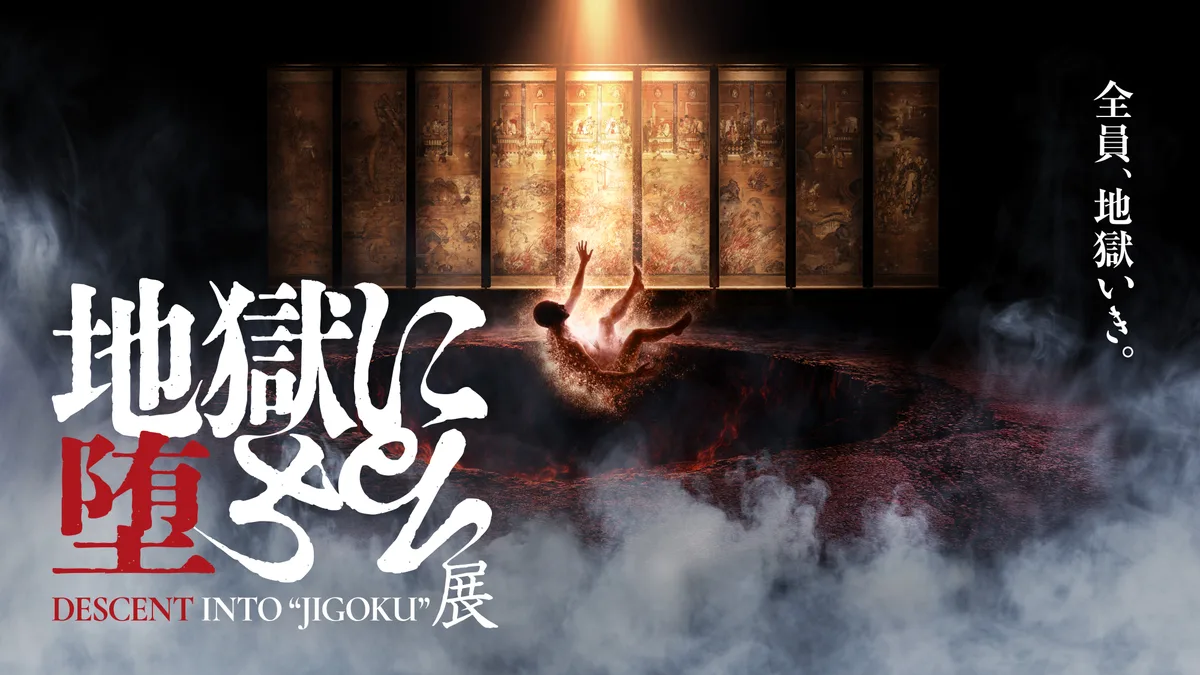
It’ll be a hell of a good time .
The concept of hell has existed in Japan for a long time, but it’s a much more nebulous one compared to the clear-cut fire-and-brimstone version of Western countries.
For example, saying things like “this job is hell” to a Japanese person is perfectly normal, but saying “it’s hot as hell” might come across a little weird as there is no immediate preconceived notion of hell being hot as opposed to also being cold, sharp, dark, urine-soaked, bloody… you get the idea.
Two versions of hell make up Japan’s overall view of it, the earliest being the Shinto concept of Yomi, which was more of a dark and foreboding place than a “hell” in the sense of people getting punished for their transgressions.
But it still wasn’t really a nice place to be either, so it would be fair to call it a prototypical Japanese hell.
Later on, around the sixth century, Buddhism was introduced to Japan by way of China and Korea.
By this time, China had really fleshed out an extremely intricate system of hells, with some counts in the tens of thousands and potentially an infinite amount beyond that, as each hell is tailored to an individual’s karmic infractions. ▼ One of the more comprehensive representations of Japanese hell can be seen in the Great Hell Painting (Dai-jigoku-e), a set of hanging scrolls kept in Chogaku Temple in the city of Tenri, Nara Prefecture.
Japanese Buddhism took these concepts and crafted an admittedly vague layout of this hell, also known as “Jigoku” to use the Buddhist terminology.
It is so vague and convoluted that not many people in Japan really understand what it entails exactly.
So to help with that, the Descent into Jigoku Exhibition Production Committee was assembled and created a traveling art exhibit to show how hell has been traditionally seen in Japan.
The exhibition takes guests through the process of death and the afterlife in order, starting with Kusozu (the nine stages of decay).
The stages start with the last moments of life, then go through all the ideal metal band names such as “distention,” “exudation of blood,” and “putrefaction.” According to some historical texts, viewing these stages of decay either directly or through imagination can help one understand the impermanence of the physical form or resist urges of lust.
From there, you can visit Chu-u , also known as Bardo in Buddhism, which is a transitional space one goes to after death and before rebirth.
Some schools say this is space in which you might encounter the Ten Kings of Jigoku who ruthlessly judge your mortal deeds and, in an almost comically bureaucratic fashion, assign you to the appropriate level of hell. ▼ Just another manic Monday at the office for the Ten Kings of hell.
この要約はメディアの公開フィードから5Newsが集約したものです。 文脈も含めた全文はsoranews24.comにあります — コンテンツの権利はSoraNews24に帰属します。