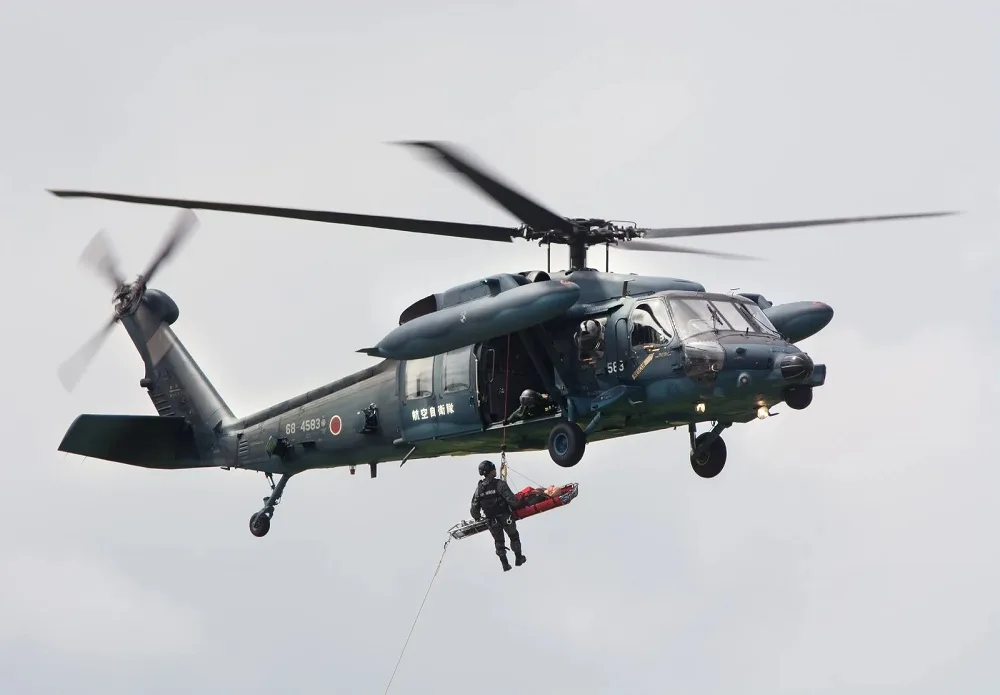
Free Mt. Fuji helicopter rescues for offseason hikers are ending in Yamanashi
Governor asks offseason hikers to “stop waving around their freedom to climb the mountain as if it’s the only thing that matters.” As the country’s most famous landmark, Mt.
Fuji inspires musings on Japan’s history, culture, and natural beauty.
Unfortunately, in recent years it also evokes thoughts of irresponsible, overconfident offseason hikers who ignore safety warnings and need someone to come and save them, and growing public frustration has lead to a new rule under which some of them will have to pay the bill for their own rescue .
To recap, the official climbing season on Mt.
Fuji runs from early July to early September.
Outside of that period, Mt.
Fuji is said to be “closed,” but its off-season status is somewhat complicated.
Technically, it’s the trails that lead from Mt.
Fuji’s fifth station (where paved streets stop) up to the top of the mountain that are off-limits.
The trails are classified as prefectural roads, and so Yamanashi and Shizuoka, the two prefectures Mt.
Fuji straddles, have the authority to bar their use during the fall, winter, and spring.
However, ascending past the fifth station during the offseason, in and of itself, is not illegal, and in recent years an increasing number of people have been trying to summit Fuji outside the climbing season.
An increasing number of them have also been failing to do so, requiring rescue teams to be dispatched to come and pick them up and carry them home.
During the offseason, when there’s less daylight, more snow, and fewer support personnel on/near the mountain, rescue operations become more difficult, as well as more dangerous for the workers involved .
この要約はメディアの公開フィードから5Newsが集約したものです。 文脈も含めた全文はsoranews24.comにあります — コンテンツの権利はSoraNews24に帰属します。