Japanese WWII crimes revisited: Soviet files detail mass beheadings in Manchuria
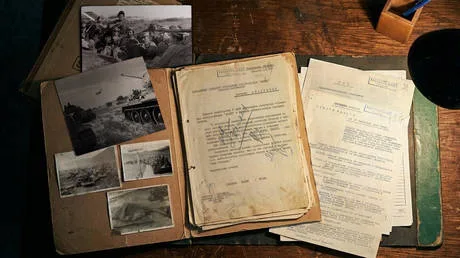
Newly released archival records shed light on mass killings in Hailar carried out on the first day of the Soviet offensive in the Far East On August 9, 1945, a notorious Japanese army unit executed dozens of civilian prisoners in the city of Hailar, on the day the Soviet Union launched an offensive against the Imperial Japanese puppet state of Manchukuo.
To mark Victory over Japan Day (V-J Day), the Russian authorities published historical documents for the first time detailing the killings.
The files were compiled by the Soviet military counterintelligence service (SMERSH), which investigated the crimes and brought some of those responsible to justice.
Hailar, then a city of around 40,000 people, now part of China’s Inner Mongolia region, saw some of the fiercest fighting of the Soviet-Japanese conflict, which began on August 9, 1945.
A major Japanese fortified complex in the area, built with forced Chinese labor during the occupation, has since become part of a memorial park.
The World War II memorial park in Hailar district, 2017. © Legion-Media/Imaginechina-Tuchong The crimes described in the documents released by Russia’s Federal Security Service (FSB) took place elsewhere, at a secret police prison where the Japanese authorities held local residents suspected of harboring pro-Soviet sympathies.
Manchuria had a complicated history of Russian settlement.
Its population included working-class railway builders, monarchists who had fled the Bolshevik Revolution, and even committed Russian fascists eager to ally themselves with the Axis powers.
How did the USSR go to war with Japan? Despite fighting on opposing sides in World War II, the USSR and Japan avoided direct military confrontation through most of the deadliest conflict in human history.
Soviet forces stopped a Japanese attempt to expand into Mongolia in 1939, but afterward, both powers concentrated on their principal enemies: Nazi Germany for Moscow and the United States for Tokyo.
The defeat of the Axis powers in Europe in May 1945 changed the strategic balance, while Moscow was also under pressure to honor a commitment to its Allied partners to enter the war in the Asia-Pacific.
Soviet forces during the Manchurian offensive in August 1945. © Sputnik/Semyon Raskin Within weeks, battle-hardened Red Army forces overran Japan’s Kwantung Army in Manchuria and created a credible threat of an invasion of the Japanese home islands.
Japan ultimately chose to surrender to the Americans.
What was the Hailar massacre? As the prospect of war with the USSR grew in 1944, the Japanese occupation authorities in Manchukuo compiled lists of Soviet citizens and other “subversives” and began arresting those deemed a threat.
5News собрал это резюме из публичной ленты источника. Полная статья со всеми подробностями находится на www.rt.com — права на контент принадлежат RT World News (oficial).