What Russia’s military elite is preparing for behind closed doors
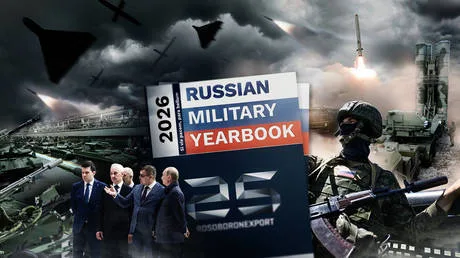
A restricted report offers a rare look at what Moscow’s military and defense-industry leaders are preparing for Every year, Russia publishes a private analytical report intended for a select group of military and defense industry leaders.
The Russian Military Yearbook is designed strictly for senior officers, security agency staff, and executives of companies in the defense sector.
Unlike public reports on the state of the armed forces, the Russian Military Yearbook is meant for internal use.
It addresses military planning, advancements in weaponry, and developments in the defense industry, along with the key priorities of the Russian military leadership amid ongoing conflicts.
Consequently, the yearbook sheds light on the priorities of Russia’s defense apparatus.
Read more An act of desperation: Russian experts respond to Zelensky’s threats to civil aviation Russia’s global plans remain unchanged and are based on two main principles First principle: Russia should be responsible for the stability and development of the Commonwealth of Independent States (CIS).
While Moscow does not harbor imperial ambitions to annex former Soviet republics, Russian politicians and military officials view these nations as vital partners in trade, infrastructure projects, and security.
Therefore, countries of the “post-Soviet space” should not join other political and military blocs, especially the EU and NATO.
Such blocs often pressure members to sever ties with Russia and are sometimes directed against Russia.
However, Russia welcomes participation in economic collaboration, such as China’s Belt and Road Initiative.
What benefits neighboring countries also benefits Russia due to the close economic ties between them.
“The West is entertaining the idea of creating a geopolitical confrontation arena in the South Caucasus, attempting to push Russia aside from the normalization of relations between Armenia and Azerbaijan.
Rejecting such attempts, the Russian Federation intends to do all it can to protect the region.” – Analytical report of the Institute of Contemporary International Studies of the Diplomatic Academy of the Russian Foreign Ministry Second principle: Moscow views stability through the lens of a “multipolar world.” This refers to a situation in international relations where there is no single hegemon or “world police.” Decisions regarding security and regional organization are made either at the regional level or during global negotiations, rather than by one or two central powers. © Russian Military Yearbook 2026 It may seem that America’s recent setbacks – including conflicts with European allies and protracted crises in Iran and the Middle East – create an ideal situation for Russian strategists.
5News собрал это резюме из публичной ленты источника. Полная статья со всеми подробностями находится на www.rt.com — права на контент принадлежат RT Russia & Former Soviet Union (oficial).