The US Air Force wants its next generation of target drones to mimic stealth jets
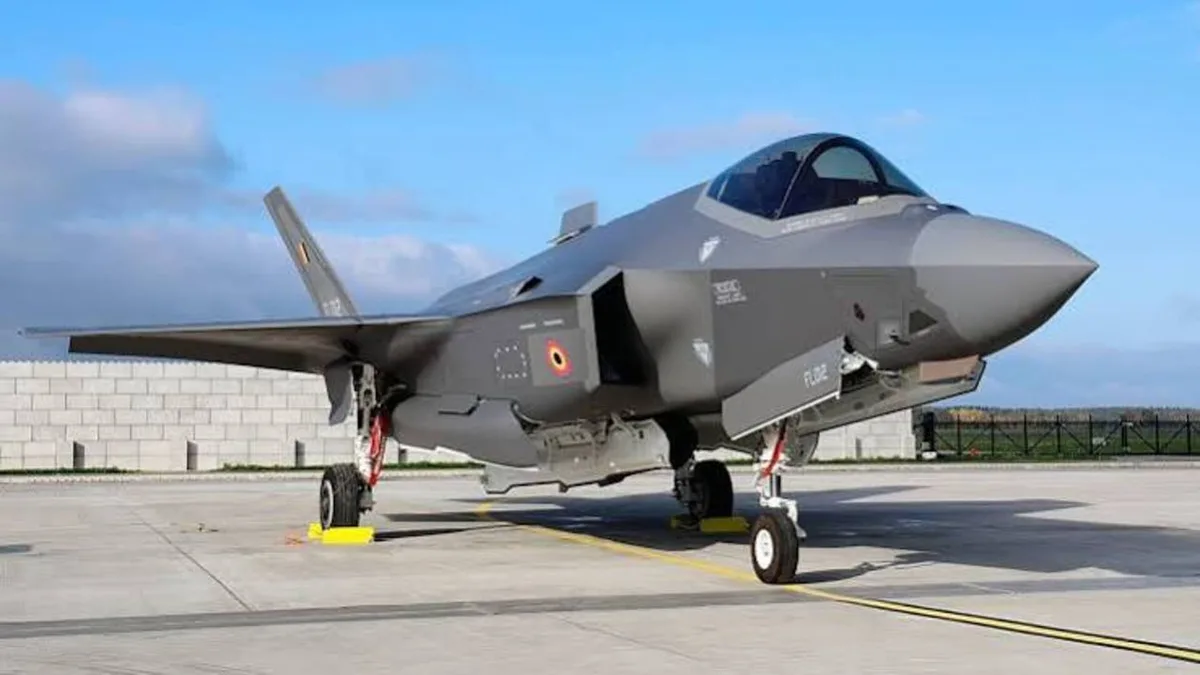
The Air Force wants drones spanning hobbyist toys to full stealth fighters Fighter-mimicking drones must fly past Mach 1.6 at high altitude Bomber-sized drones need matching radar, heat, and physical dimension signatures The US Air Force is seeking industry proposals for target drones capable of imitating threats from cheap commercial aircraft to stealth fighters.
A recent Request for Information issued by the service sets a deadline of September 28 2026 for companies to submit concepts.
The requested drone series would span nearly every category of aerial threat, from small hobbyist-style platforms to heavy bombers.
A range of threats in one series The Air Force's request describes platforms that must stand in for cheap hobbyist drones on one end and advanced fifth-generation fighters or large multiengine aircraft on the other.
For supersonic fighter simulation, the request describes speeds beyond Mach 1.6 at roughly 40,000 feet, combined with sharp high-G maneuvering.
It also calls for tightly controlled radar signatures and layered infrared and radio-frequency emissions meant to resemble a genuine combat aircraft.
Systems meant to stand in for large drones would need to operate at altitudes near 50,000 feet, matching how high those aircraft actually fly.
Midsize platforms would need to fly at speeds between Mach 0.5 and 0.8 while making sharp, forceful turns similar to real fighters.
Smaller systems, meant to substitute for compact scout-class drones, would fly well under 150 knots and support coordinated swarm behaviour.
For aircraft the size of a C-130, engineers care less about raw performance and more about matching physical scale, subsonic handling, and propulsion behaviour.
That accuracy allows engineers to test how well a missile's guidance system and warhead would perform against a realistically sized aircraft.
Cost and history shape the approach The service is explicit that affordability matters as much as realism, describing a preference for systems cheap and simple enough to be treated as expendable when a test requires it.
Rather than relying solely on traditional defense contractors, the Air Force is inviting commercial, modified commercial, and dual-use proposals that might undercut the cost and complexity of older programs.
This approach follows nearly a century of remote-controlled target aircraft, stretching back to Britain's converted Tiger Moth trainers flown in the 1930s.
5News aggregated this summary from the outlet’s public feed. The full article, with all the context, is on www.techradar.com — the content belongs to TechRadar.