The floating PC case trend is about more than good looks
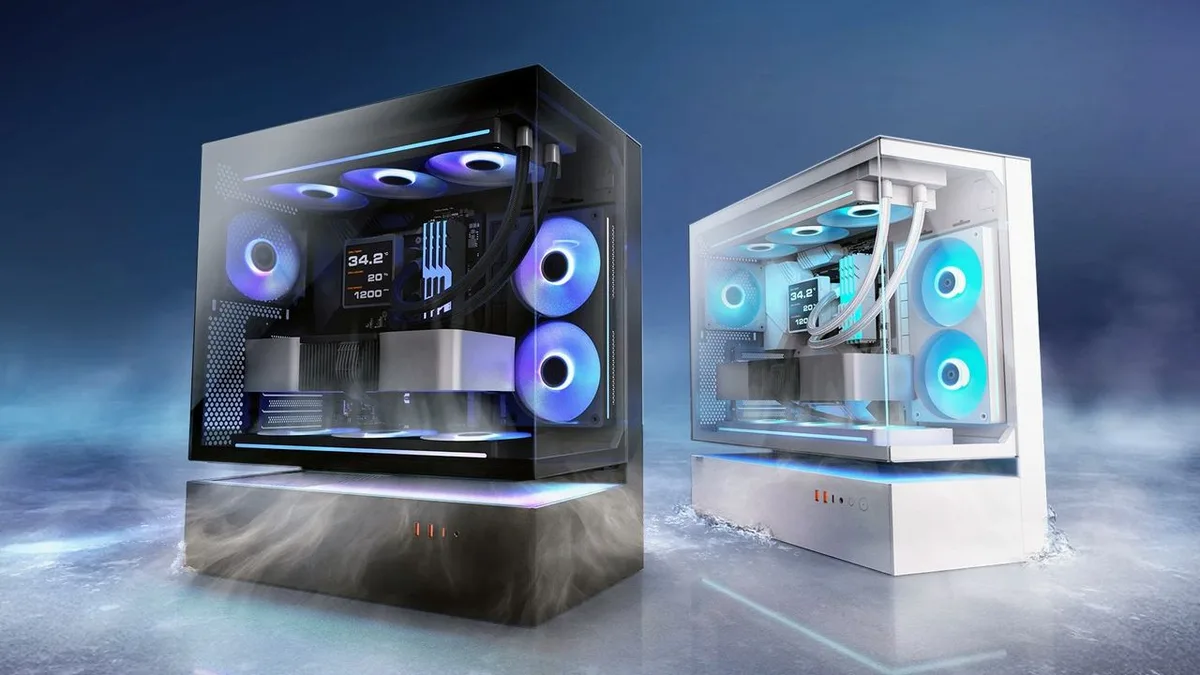
Most PC cases keep the main chassis relatively close to the desk or floor, but a growing number of new designs are doing something much more fun, yet practical, with the space underneath.
Our favourites deliberately add a gap that gives the case a floating effect.
Others take a simpler approach and raise the whole chassis on a stand or base.
Either way, manufacturers are paying much more attention to the underside of your PC.
The new designs are definitely about style, particularly as panoramic glass cases have become more popular, but there’s a practical side to floating cases too.
Opening up the lower part of a build gives manufacturers new ways to get cool air towards one of its hottest components: the graphics card.
Some designs can also keep the PSU’s airflow separate from the main component chamber.
Of course, not everyone wants to DIY a new build, so for anyone who would rather buy a complete system, it’s worth checking out our guide to the best gaming PCs .
Why are PC cases starting to float? Panoramic cases, often called fish-tank cases, have become increasingly popular, often replacing conventional mesh panels with extensive glass.
While glass makes it easy to see your new CPU cooler’s built-in display , it does mean manufacturers need to take a fresh approach with airflow.
One of the most distinctive new designs is the floating style, where the lower part of the case is deliberately separated or recessed so the main body looks like it’s suspended above the base.
The Cougar CFV235 is one of our favourite examples.
Cougar separates the PSU cabin from the main component chamber, leaving an open section between them that becomes part of both the case’s appearance and its ventilation.
Our colleagues over at Tom’s Hardware highlighted the design’s 270-degree airflow when the CFV235 was unveiled , with air able to enter the floating section from several directions.
5News aggregated this summary from the outlet’s public feed. The full article, with all the context, is on www.techradar.com — the content belongs to TechRadar.