I spoke to Apple’s new VP of Hardware Engineering about why he's ‘especially proud’ of the iPhone Duo’s hinge durability and the reliability of Ceramic Shield 2: ‘When I see someone put a screen protector on their iPhone, it makes my skin crawl’
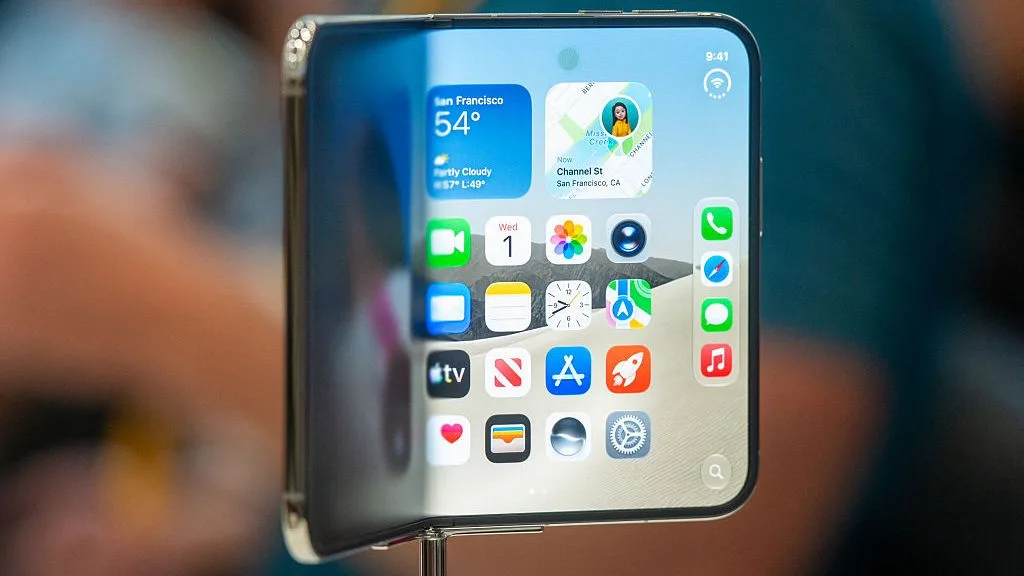
In the midst of hype for Apple’s new A20 Pro chipset and slick foldable software, the company’s durability department is quietly having a moment.
Its Ceramic Shield 2 display glass — first introduced on the iPhone 17 line and returning this year on the iPhone 18 Pro — is earning plaudits for delivering on the promise of 3x better scratch resistance 12 months on from its release, while the iPhone Duo is set to arrive next month with a host of impressive on-paper durability credentials (including, notably, a Galaxy Z Fold 8 -beating IP68 resistance rating).
But while features like ingress protection and corrosion resistance aren’t the sexiest topics of discussion at Apple Park, they are some of the most important for ensuring Apple’s products stand the test of time — and Tom Marieb, the company’s new Vice President of Hardware Engineering (a role formerly occupied by CEO John Ternus), knows that better than most.
I had the chance to quiz Marieb on the iPhone 18 Pro and iPhone Duo in a group interview at Apple’s London HQ, and he lifted the lid on how Ceramic Shield 2 — which we described as “the first iPhone glass we fully trust” earlier this year — managed to deliver such a noticeable jump in quality versus the original Ceramic Shield, and why he’s “especially proud” of the iPhone Duo’s hinge durability.
Both the iPhone 18 Pro (above) and iPhone Duo feature Ceramic Shield 2 on their respective front displays (Image credit: Future/Jacob Krol) “Personally, when I see someone put a screen protector on their iPhone, it makes my skin crawl, because we work so hard to make beautiful front screens,” Marieb told me.
“So we very much wanted to develop new coatings that could withstand [scratches], but also make sure that these coatings were wear-resistant as well.
We worry about scratching, which is obviously very dependent on having [material that can withstand] very sharp things going into the screen.
But we also worry about wear over time; as people use the screen, whether they’ll wear away that surface.
And it turns out that those things are a little counterindicated in a lot of materials.
“So we had to try to optimize both of those [qualities] simultaneously [...] And I think we finally hit on a nice balance between the two [in Ceramic Shield 2].
We could have made it more scratch-resistant, but it would have been a little less wear-resistant.
It’s the long life we’re looking for against both of those loads over time.” We very much try to say, ‘How are customers actually using this? What exactly are they exposing it to in the real world?’ And we make tests that mimic those things.
5News aggregated this summary from the outlet’s public feed. The full article, with all the context, is on www.techradar.com — the content belongs to TechRadar.