Wild swimming linked to higher risk of stomach bugs and skin rashes
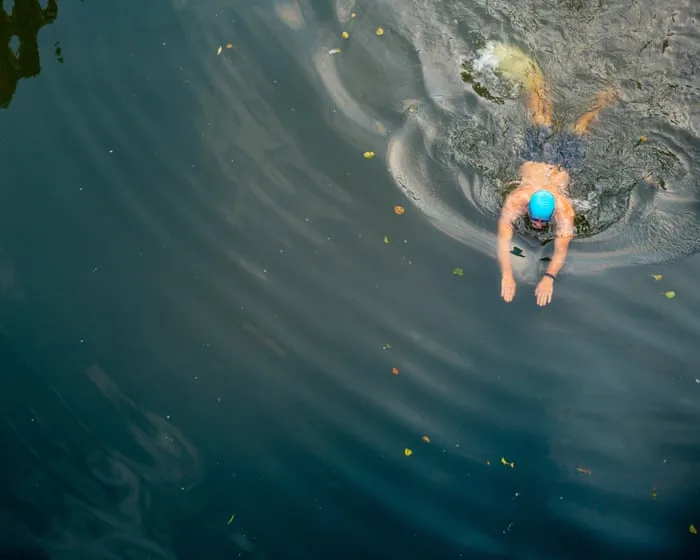
Findings from research into illnesses associated with bathing in lakes and rivers come amid boom in hobby
Wild swimming has been linked to a higher risk of stomach bugs and skin rashes, according to the largest ever controlled study of illnesses associated with bathing in rivers and lakes.
The research found that swimmers at locations in Hungary were more than twice as likely to develop skin problems, while the risk of contracting a stomach bug rose significantly in water with higher concentrations of E coli and other bacteria linked to faecal pollution.
The findings raise questions about the World Health Organization’s decision to drop E coli as a recommended indicator of pollution in freshwater bathing sites, amid growing public concern over water quality and a boom in outdoor swimming .
Paul Hunter, a professor of medicine at the University of East Anglia , who led the study, said: “The original guidelines, which were published in about 2003 – and I was part of the group that developed those – recommended [monitoring of] both E coli and enterococci for marine and fresh waters.
“WHO produced new guidelines , and they basically said: ‘Don’t worry about E coli , just focus on enterococci.’ Rather embarrassingly, what we found is that enterococci aren’t associated with increased risk, but E coli is.”
The study involved 2,368 people at two river and two lake-like bathing sites in Hungary . Participants were randomly allocated either to spend 10 minutes in the water, immersing their face at least three times, or to remain on the shore without entering it.
Water was sampled throughout the trials, allowing researchers to estimate each swimmer’s exposure to E coli , intestinal enterococci and somatic coliphages – viruses that infect bacteria and can indicate faecal contamination. Participants were questioned about symptoms a week later.
About 2.1% of swimmers reported gastrointestinal illness, including diarrhoea, vomiting or nausea accompanied by fever, compared with 1.9% of non-swimmers.
Although bathing alone was not statistically linked to stomach illness, the risk increased significantly among swimmers exposed to higher concentrations of E coli and coliphages.
Skin complaints, defined as a rash, ulcer or itching, were reported by 2.7% of swimmers and 1.3% of people who stayed out of the water, making bathers more than twice as likely to develop a skin ailment.
Hunter said he was “fairly confident” that the findings would be applicable to the UK despite the research being conducted in Hungary. A separate German study in 2006 produced similar results.
He added: “We have two different countries with essentially the same findings, Germany and Hungary, and climatically they are not that different to us in many ways.”
The skin problems reported were not associated with any of the three measures of faecal contamination, suggesting other organisms or pollutants may have been responsible.
5News aggregated this summary from the outlet’s public feed. The full article, with all the context, is on www.theguardian.com — the content belongs to The Guardian Society Health.