Overcooked? Why robotic pizza makers are failing
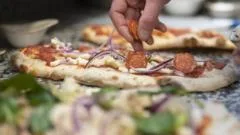
The "dough feeder". The sauce and cheese modules – even the pepperoni-sprinkler. All lay still.
A now defunct duo of robots were supposed to be churning out pizzas at a Moto Pizza restaurant in Seattle.
However, in May the pair were rendered "basically useless" when their supplier, Picnic, abruptly shut down. , external Technical support for the robots evaporated at that moment, says Lee Kindell, founder and chief executive of Moto Pizza.
He was left wondering what to do with the $160,000 (£118,000), cabinet-like machines and whether buying in pizza bots was really worth it.
"I don't know if I want to do a partnership again because of the failures," he says.
The robot pizza-making business has, it's true, been littered with sorry tales of overcooked promises and melting fortunes. Besides Picnic, other companies that have come and gone include Zume , external and Pazzi, which used , external robot arms to assemble pizzas, as well as Basil Street , external , a purveyor of pizza vending machines.
Although so-called fast food might seem an easy target for automation, it's proved harder than many expected. Plus, bringing robots into pizza restaurants could take away entry-level jobs in the hospitality sector. Is the future really filled with robotic pizza?
"We haven't yet seen any of the success stories materialise the way some people thought they would," admits Sara Senatore, senior restaurants analyst at Bank of America. Her employer has financial interests in multiple high street pizza chains including Papa Johns and Domino's.
Food preparation bots are sometimes clumsy – dropping ingredients in the wrong places at times, she explains. Conversely, "Humans are very efficient at making pizza."
But Kindell, despite his frustrations with Picnic, is surprisingly undeterred. He is a fan of full automation. "I want to be able to walk up to, let's say, a type of kiosk, put in your order, and it makes a fresh pizza," he tells the BBC.
Kindell, who once made all his dough by hand – until an elbow tendon injury forced him to investigate using machines instead, is now working on his own version of a pizza-making robot.
He declines to share details but the contraption will make square pan-style pies and that the machine is inspired by the way 3D printers work. If things go well, he says he could have a fully operational version of the device by the summer of 2027.
Given that he admits he has "no experience" in robotics, I question why he would want to invest in such a dicey business. Kindell says that failed pizza robot companies have nonetheless generated useful data and made strides in developing their technology. It's just a matter of time before someone gets these things to work, he insists.
On jobs, he claims that even "fully autonomous" pizza robots won't threaten workers. Kindell previously used Picnic's robots at T-Mobile Park, home of the Seattle Mariners, a baseball team.
5News aggregated this summary from the outlet’s public feed. The full article, with all the context, is on www.bbc.co.uk — the content belongs to BBC News Technology.