AdGuard makes its open-source stealth VPN protocol native to macOS with one-click setup
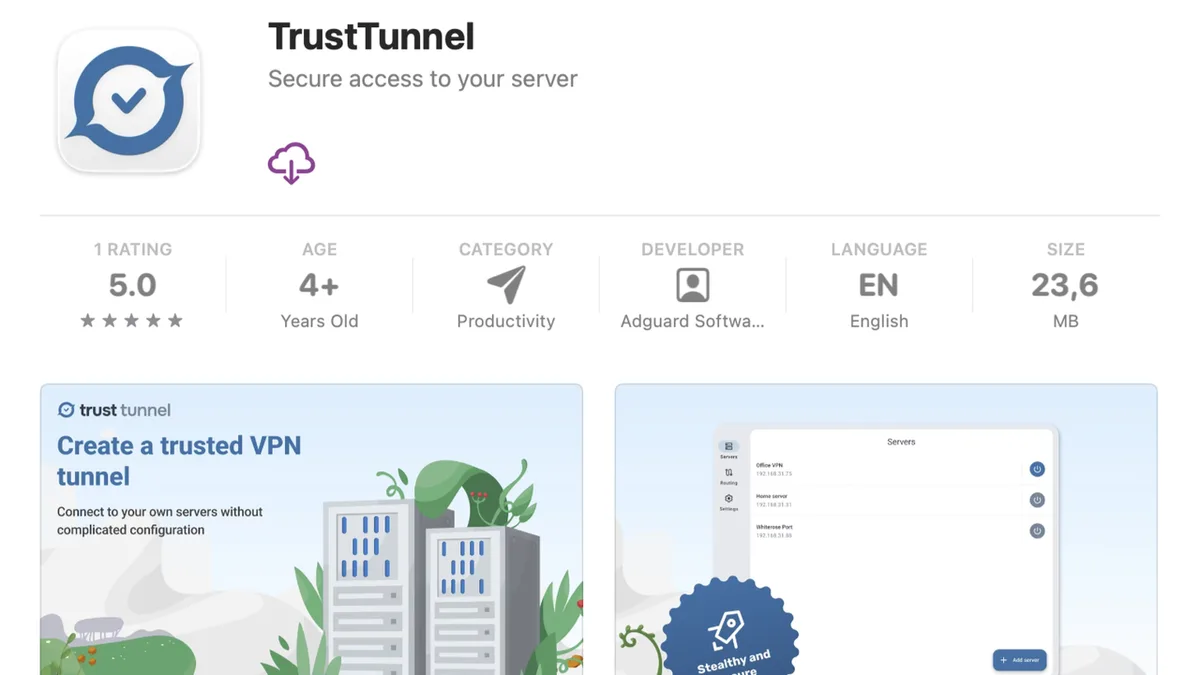
AdGuard's TrustTunnel is now available as a native macOS app The protocol camouflages VPN traffic as standard HTTPS web browsing A new feature allows users to resolve connection problems much faster For those looking to secure their online privacy in regions with heavy digital censorship, choosing the best VPN is crucial.
However, the most advanced anti-censorship tools often require technical know-how that can alienate everyday users.
AdGuard is changing that dynamic for Apple users with a major update to its custom stealth VPN protocol.
AdGuard’s open-source VPN protocol , TrustTunnel, has officially launched a native macOS client.
Previously restricted to those comfortable tinkering in the command line, the protocol is now easily accessible to anyone via the Mac App Store.
"Let’s be honest: not everyone gets excited about opening Terminal," the TrustTunnel development team admitted in the version 1.2 release notes on GitHub .
"Until now, that’s exactly what macOS users had to do to use TrustTunnel.
With version 1.2, those days are over." The update means Mac users no longer need complex terminal commands or extra setups to run a self-hosted VPN server.
By giving the protocol a simple, native graphical interface (GUI), AdGuard is bringing highly effective network-bypassing technology to the everyday consumer, effectively removing the usual steep learning curve.
AdGuard — Free and Paid options AdGuard VPN is a secure and capable VPN that uses an open-source proprietary stealth protocol to evade blocks and advanced security features like post-quantum encryption.
It offers a free VPN service capped at 3 GB per month.
For unlimited access, plans start from the equivalent of a $2.99 monthly fee and are covered by a 30-day money-back guarantee.
View Deal Blending in with the crowd TrustTunnel's primary selling point is its ability to bypass deep packet inspection (DPI) .
This is the aggressive monitoring method that restrictive networks, from strict university campus Wi-Fi to oppressive regime firewalls, use to identify and block traditional VPN traffic.
5News aggregated this summary from the outlet’s public feed. The full article, with all the context, is on www.techradar.com — the content belongs to TechRadar.