Major sodium-ion battery milestone passed by California startup — Unigrid aces Hyundai’s safety tests down to -20C as experts call tech a 'compelling alternative' to lithium-ion
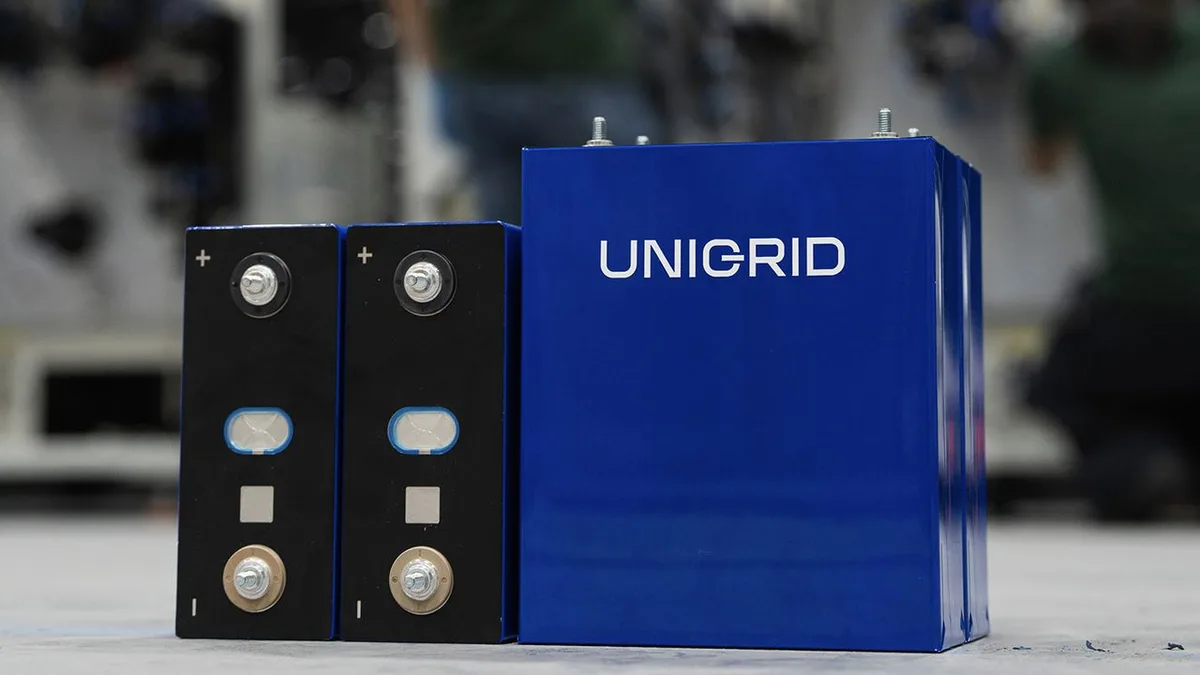
Lithium-ion batteries are one of the most successful technologies ever invented, and now span everything from smartphones to power stations — but the technology is not without its flaws and limitations, and scientists are now busy trying to figure out which type of next-gen battery will take over next.
One of the big safety risks with lithium-ion is thermal runaway, causing overheating and fires, and some future battery technologies are focusing on this in particular.
One of the leading contenders, sodium-ion, just passed a major safety test at Hyundai, while this battery type is also showing lots of promise overall.
Here's what you need to know about the recent breakthrough we've seen with sodium-ion technology, what its benefits are more broadly, and how it might eventually overtake lithium-ion as the default battery chemistry of choice.
Hyundai, Unigrid, and the thermal runway We know that lithium-ion batteries are a fire risk , and that's specifically where a US start-up called Unigrid is directing its attention.
The company has developed a type of sodium-ion battery, using sodium chromium oxide (NCO) cell chemistry, which has just been given the safety seal of approval by South Korean giant Hyundai.
According to Unigrid (via Interesting Engineering ), the batteries have now achieved "critical technology validation milestones" after being put to the test by Hyundai's technical evaluation program.
Stringent safety experiments were completed with no fire and no thermal propagation (where fire spreads between batteries, an important consideration in factories and industrial use).
What's more, the sodium-ion NCO batteries showed "minimal capacity degradation" after sustained continuous cycling, while the units also held up under a wide range of temperatures: from -20C to 60C (that's -4F to 140F).
This is only one set of tests in a limited number of scenarios, but the tech has passed with an excellent grade.
Today's gadgets make use of lithium-ion (Image credit: Future/Lance Ulanoff) The key change here is given away in the name: sodium ions rather than lithium ions are shuttling between the positive electrode (cathode) and negative electrode (anode).
Both battery technologies have actually been around for about the same length of time, but the superior energy density of lithium-ion is why it's won out in recent years.
Now sodium-ion is increasingly being looked at again.
As well as potentially improved safety from a thermal runaway perspective, another key difference is that sodium is much more abundant and widely available than lithium is.
5News aggregated this summary from the outlet’s public feed. The full article, with all the context, is on www.techradar.com — the content belongs to TechRadar.