Nvidia found $1B under the couch to help secure American scientific computing dominance
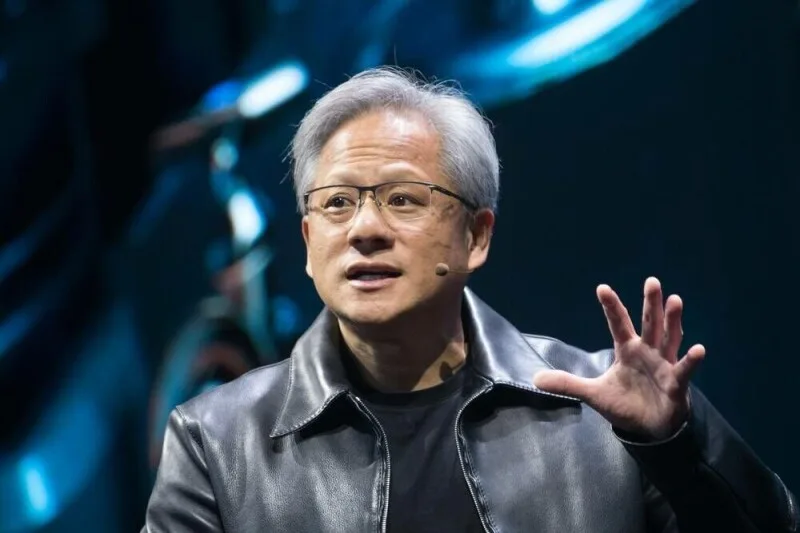
Nvidia on Thursday scraped together some spare change to commit $1 billion — about 1/60th of its quarterly profits — to funding US scientific discovery over the next five years.
The commitment, announced during an event in Washington, DC, aims to support the research and development of AI — or is it "super intelligence" now? — in fields including quantum computing, healthcare, and energy security.
Nvidia's choice of technologies is not surprising as it has long aspired to fuse AI and high-performance computing.
And while LLM training and inference pay Nvidia's bills, the GPU giant has continued to introduce new CUDA libraries specifically for AI-assisted quantum computing, healthcare, drug discovery, and physics simulation.
The initiative is part of the US government's broader Genesis Mission, announced late last year by the Trump administration, which aims to use AI to drive the scientific discoveries necessary to ensure the country's continued technological leadership.
The program marks Nvidia's return to US supercomputing in a big way.
The Department of Energy's (DoE) last flagship supercomputers powered by Nvidia, Summitand Sierra, were commissioned all the way back in 2018.
The A100-based Perlmutter system launched in 2021 is also notable, but fell far short of the older systems.
And while Nvidia never stopped building supers for the US government, they tended to be significantly smaller than the massive AMD-based platforms like Frontier and El Capitan.
That changed last year when Nvidia revealed it would supply the US government with no fewer than seven new supercomputers across the Argonne, Los Alamos, and Lawrence Berkeley National Laboratories.
Argonne will house the 100,000 Blackwell-GPU-based Solstice system.
Built in collaboration with Oracle, the machine is largely aimed at emerging AI workloads, which don't depend on ultra-high precision computation and instead can get by with 16, eight or even four bits of precision.
That puts Nvidia in a strong position to meet the US government's goals under the Genesis Mission.
Over the past few generations of GPUs, Nvidia has traded much of its accelerators' double-precision FP64 grunt in favor of higher throughput at precisions used by more lucrative AI workloads.
5News aggregated this summary from the outlet’s public feed. The full article, with all the context, is on www.theregister.com — the content belongs to The Register.