NASA taps DoE to help it build nuclear space reactors
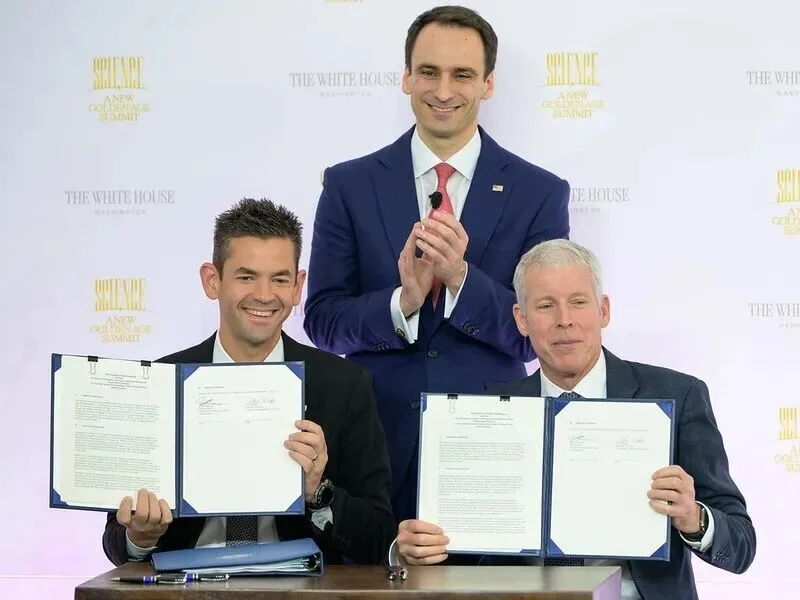
NASA and the Department of Energy have agreed to expand their collaboration on the space agency's nuclear ambitions, as administrator Jared Isaacman pushes ahead with a tight deadline to launch a fission-powered spacecraft to Mars.
“We are entering the ‘Nuclear NASA-era,’” Isaacman said at a signing ceremony where he and Energy Secretary Chris Wright signed a joint memorandum of understanding.
The MOU, the full text of which doesn’t appear to have been published, establishes a framework for collaboration on space nuclear technology.
Per NASA, the agreement “unites both agencies” in pursuing its objectives, with work to include research and fuel production, testing, launch integration, and operations.
“Nuclear power will allow us to go farther, operate longer, and field more capable spacecraft and instruments than ever before,” Isaacman added.
“The work we’re doing today is laying the foundation for the fission-poweuing NASA’s objred spacecraft of tomorrow and opening an entirely new frontier for exploration and discovery.” NASA has been making big plans to launch nuclear reactors into space since earlier this year when the agency paused work on the orbital Lunar Gateway station in favor of a base on the Moon’s surface.
Those plans include a nuclear reactor to power said base, which NASA said on Thursday it intends to have ready for launch by 2030, giving the agency precious little time to meet such an ambitious goal.
NASA has provided little evidence the initiative is on track, aside from noting in Thursday's announcement that it is “making steady progress” on Lunar Reactor-1 (LR-1), the unit it wants to use to power its Moon base.
Before then, however, NASA faces an even tighter deadline for Space Reactor-1 (SR-1), which it intends to use to power a nuclear-propelled spacecraft scheduled to launch in December 2028.
That’s just over two years away, mind you, and NASA has provided little public evidence of progress on the spacecraft, which it has dubbed "Freedom." NASA provided details [PDF] for SR-1 back in March when it paused work on the Lunar Gateway, describing the spacecraft as being mostly constructed from a repurposed spacecraft bus that NASA had almost completed for a previous project.
The reactor would produce more than 20 kilowatts of electricity to power Freedom's electric thrusters on its journey to Mars, where it would deliver three Ingenuity-class helicopters to survey potential future human landing sites.
Whether that’ll happen on any sort of timeline that resembles the current one is anyone’s guess, but let’s face it: NASA doesn’t exactly have a great track record for getting things done on time.
5News aggregated this summary from the outlet’s public feed. The full article, with all the context, is on www.theregister.com — the content belongs to The Register.