Pain of NHS whistleblowers as call for Lucy Letby retrial grows louder
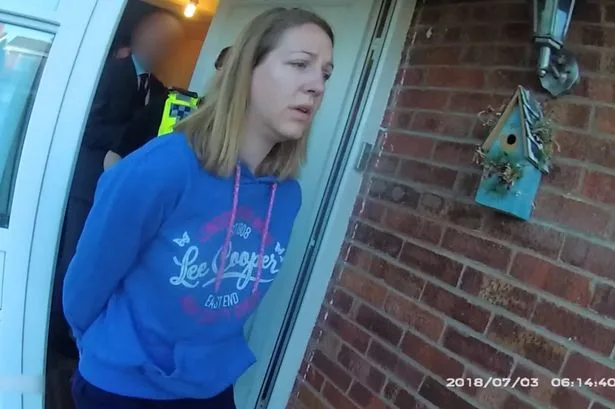
On the morning of July 3, 2018, Lucy Letby was arrested at her Chester home on suspicion of eight counts of murder and six counts of attempted murder of vulnerable newborns.
Suspicions had been raised over the neonatal nurse as early as September 2015, when Countess of Chester Hospital staff began to notice a disturbing correlation between infant deaths and Letby's shift patterns.
As the death toll rose, the connection became impossible to ignore. For months, dread filled the hospital corridors, but, as the Thirwall Inquiry would later determine, senior managers were slow to react , delaying urgent meetings for which medics pleaded.
Had Letby been removed from her duties in October 2015, when concerns were first raised, twin babies O and P may not have died in June 2016. It wasn't until June 29, 2016, that Letby was finally removed from frontline duties.
Mere weeks after Letby's first arrest, Dr Susan Gilby joined the Countess of Chester as medical director and deputy chief executive. As Dr Gilby would later testify during the inquiry, having reviewed the June 2016 CQC report, she'd expected to "go into a high-performing organisation".
Ahead of her start date, Dr Gilby was "brought up to speed" on some of the unfolding issues. She told the Mirror : "I was aware that there had been many unexplained and unexpected deaths and collapses on the unit in 2015/16, and I was aware that there were some relationship problems between the paediatrician consultants and the executive team, and that the chair was trying to improve relations between those two groups ."
The Thirwall Inquiry would later refer to this division as a "gulf". Consultants were forced to apologise to Letby, and management even threatened to report whistleblowers to the General Medical Council (GMC).
Dr Gilby, appointed following the retirement of Mr Ian Harvey, was informed of Letby's arrest shortly before the announcement. The staff reaction was unexpected. She recalled: "I thought I would find a team who were very distressed by this turn of events, as I said in my Thirwall statement . But in fact, I found that three weeks after the arrest, they were very entrenched in their view that nothing would come of this ."
Considering why this might have been case, Dr Gilby reflected: "I've no idea why they thought that . It seemed that they'd just not been professionally curious enough about why babies were collapsing and dying unexpectedly and in an unexplained manner on their unit .
"[...] If you have repeated cardiovascular collapses and death, and you can't explain them, and they weren't expected, that just doesn't happen in clinical practice ."
Dr Gilby spent three hours, alongside Dr Brearey, analysing the timeline of each incident. She also read consultant questions submitted to Mr Chambers, telling the inquiry how she could “see the anguish coming off the page", and how she'd noticed her predecessor's "very defensive" response.
She continued: "It was important that I listened to the paediatricians and looked at all of the documents I had at my disposal myself, because I was being asked to deal with the paediatricians, and also to arrange the mediation.
5News aggregated this summary from the outlet’s public feed. The full article, with all the context, is on www.mirror.co.uk — the content belongs to The Mirror UK News.