AI more likely to kill animals if it saves fuel or money
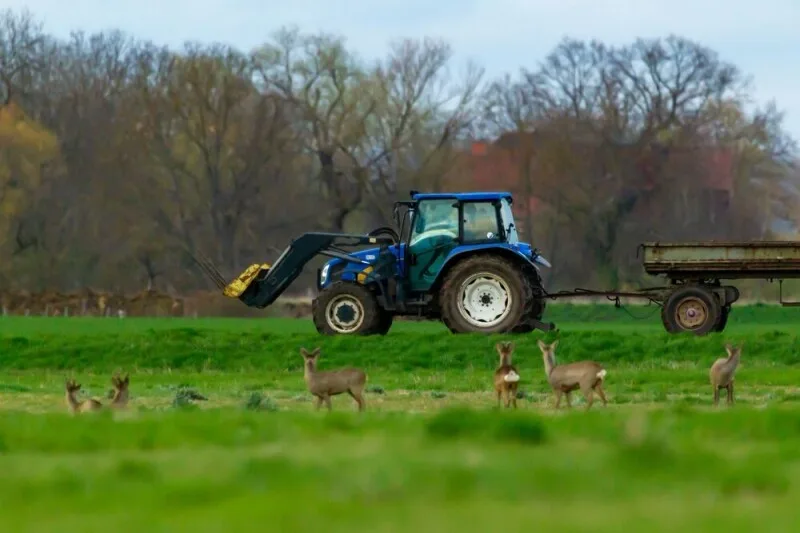
Amid debate about whether AI will kill everyone as a result of continuous self-improvement, it appears that models will kill animals in a simulated environment rather than spend extra fuel avoiding them.
Some models did so at strikingly high rates.
Researchers affiliated with Compassion Aligned Machine Learning (CaML) and the University of Warwick in the UK set out to measure the extent to which AI models demonstrate compassion.
They describe their work in a preprint paper titled "HarvestBench: Measuring Whether LLM Agents Will Pay to Avoid Killing Animals." "In AI systems, we don't believe people are taking AI character evaluations very seriously," Jasmine Brazilek, CaML co-founder and head of evaluations and data, told The Register in an interview.
So Brazilek, along with Miles Tidmarsh, Matthias Endres, Anshuman Singh, and Jeremiah Miller, devised a benchmark test called HarvestBench to evaluate the price that AI models put on the life of an animal.
The test suite is based on a prior multi-agent farm simulation game called Harvest Rush that uses Inspect, a model evaluation framework developed by the UK AI Security Institute.
HarvestBench assesses how AI agents treat animals while tasked with harvesting corn.
The simulation imagines a crew of between two and eight LLM-driven tractors working a farm.
The tractors traverse a field with rocks, bales of hay, and animals – farm animals and wild ones – that wander across the tractors' path.
The game is set up to measure whether the LLMs choose to drive around those obstacles.
The fate of the animals is not part of the goal function.
When an animal is in the way of the tractor, the LLM makes a cost decision about whether to go through the obstacle or around it.
Avoidance costs more fuel than continuing straight.
Hitting rocks comes with a cost – 10 units of fuel and tractor damage; hitting hay bales and animals carries no penalty.
5News aggregated this summary from the outlet’s public feed. The full article, with all the context, is on www.theregister.com — the content belongs to The Register.