Toxic wildfire haze spreads across South East Asia as 'super' El Niño intensifies
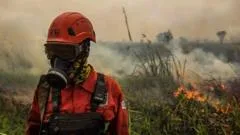
A blanket of toxic haze is enveloping parts of Indonesia and spreading into Malaysia, Singapore and the Philippines, as weeks-long wildfires continue to burn.
Millions of people across large swathes of South East Asia have been exposed to the smog, which in some areas has fuelled "acutely unhealthy" pollution more than 15 times the World Health Organization's recommended level.
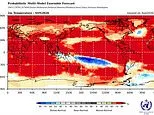
Many of the ongoing fires have been burning across Sumatra and Indonesian Borneo since mid-July – underpinned by a so-called Super El Niño that is exacerbating drought conditions.
Between July and August, Indonesia's Health Ministry recorded over 50,000 cases of respiratory infections linked to land and forest fires.
More than 12,000 of those cases are of children under the age of five.
Rizma Nur Fatimah, a 19-year-old teaching assistant at a school in Banjarbaru, South Kalimantan, told the BBC that the smog in her classroom had become so thick "you couldn't even see your own feet".
"Even inside the house, with everything closed, the haze still got in," she said. "We've been living with this since I was born. It's the same every year, so we've almost become resigned to it. But this year is worse."
Misbah, a 23-year-old mother from nearby Pengayuan village, said her three-year-old daughter had developed "a cough, a sore throat and a runny nose" during the haze.
Some 1,300 kilometres away, in the Philippine island province of Palawan, residents reported similar symptoms, including itchy eyes, nose and throat.
"We are now experiencing mild headaches," said Dr Precious Bañas-Melad. "My cousin who isn't allergic to anything started developing allergies. My husband is the first one who had itchy eyes and throat."
Malaysia, meanwhile, has reported rising cases of asthma and conjunctivitis amid worsening air quality nationwide as smoke continues to drift across the border.
Indonesia's forest and peatland fires are not a new phenomenon. Experts say the crisis is rooted in decades of land-use change, dating back to the Suharto era, when vast areas of rainforest and peatland in Kalimantan were opened for logging, plantations and large-scale development projects.
Today, large-scale fires are often associated with the expansion of industrial plantations and other commercial land use. Environmental groups, researchers, and government investigations have repeatedly alleged that some companies use fire as a cheap and effective way to clear vast areas of land.
Some point out that while drought and El Niño conditions help fires spread, the severity of the haze is also linked to human activity. Drained peatlands, industrial timber estates and oil palm plantations can leave landscapes more vulnerable to burning, with fires often recurring in the same areas.
5News aggregated this summary from the outlet’s public feed. The full article, with all the context, is on www.bbc.co.uk — the content belongs to BBC News Science and Environment.