Jay-Z in 8 review – the rapper’s interminable interview show should have been a podcast
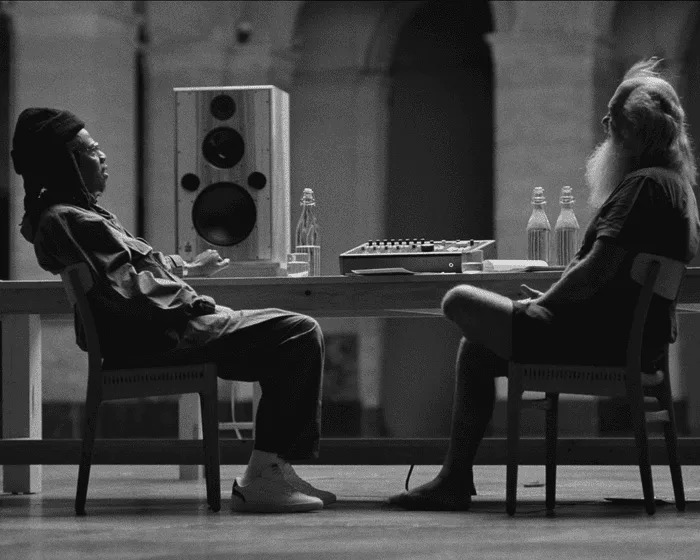
Rick Rubin’s eight-part interview series with the MC is irritatingly unstructured, has portions that feel like filler and would hugely benefit from a different medium – which encourages use of the pause button
J ay-Z in 8 does what it says on the can: the docuseries, released by Mubi, finds influential, mercurial superproducer Rick Rubin interviewing rap titan Jay-Z over the course of eight meandering, freeform episodes. Directed by Rubin himself and shot in black and white, the series is ostensibly designed to give viewers a look inside the brain of a godlike musical figure as he celebrates 30 years in music.
As it makes eminently clear, this is a deeply reflective time for Jay-Z: in any given episode, he is liable to make reference to old collaborators such as Biggie and Jaz-O, reminisce on his upbringing in the Marcy Projects (the public housing units in Brooklyn where he grew up), and speak with astonishment about his rapid rise from crack dealer to generational rapper, often swinging between anecdotes with free-associative ease.
Therein lies the problem with Jay-Z in 8. It’s remarkable to see someone of his stature talk so openly about his life and career without adornment, but there is no narrative or thematic structure to this show. Aside from the moments when Jay and Rubin listen to entire songs together – which then spark more anecdotes and interview questions – it is lacking connective tissue to hold together Jay’s stories for a casual fan.
For a relative Jay-Z agnostic like myself – I like the classic records well enough but didn’t grow up with his music, and generally have a fairly superficial relationship with that era of rap music – Jay-Z in 8 borders on the interminable. Each conversation is interesting, but there’s something profoundly abrasive about being dropped into such unstructured chat. The format is clearly modelled on longform interview shows such as David Letterman’s My Next Guest Needs No Introduction, but where Letterman is an incisive, journalistically minded interviewer with decades of experience steering conversations, Rubin is famous for his terseness. After he and Jay listen to one song, for example, Rubin simply says, “I don’t know how you did that” – a statement of fact, perhaps, but hardly a guiding idea for a casual viewer who sees the show on their Mubi homepage and decides to dive in.
At one point, Rubin offers a theory: “I don’t know that people really know how to listen to hip-hop,” he says. “It’s so dense with information, and a lot of people kind of hear the hook and the beat.” But that’s the thing about a hook and a beat: they can help draw in a listener who otherwise might not think they’re equipped to take in the rest of the information the song is providing.
5News aggregated this summary from the outlet’s public feed. The full article, with all the context, is on www.theguardian.com — the content belongs to The Guardian UK.