Breaking Down the Ominous Ending of Below
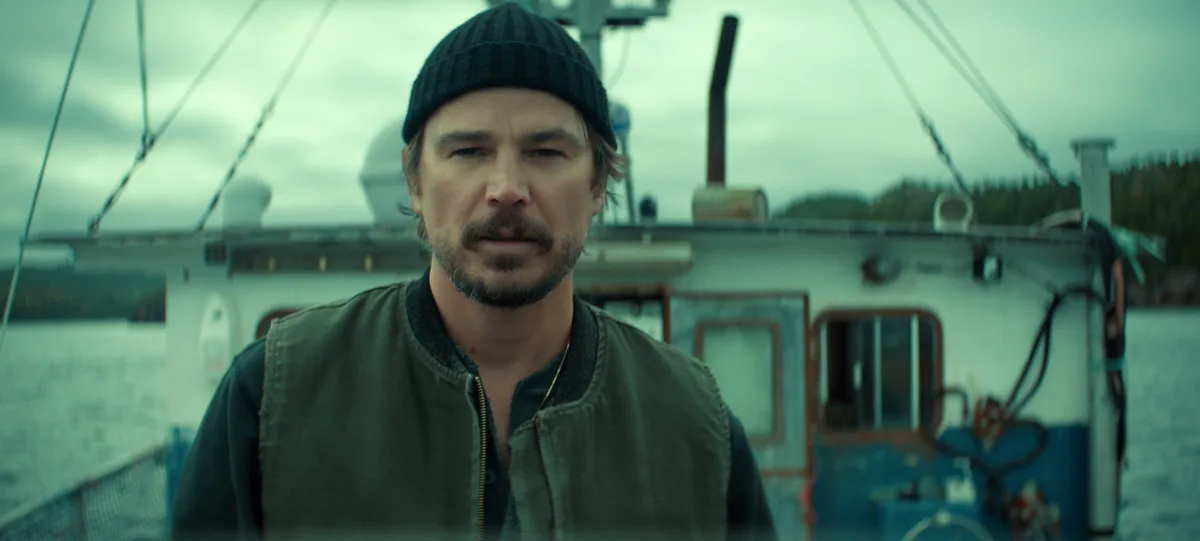
Josh Hartnett in Below —Courtesy of Netflix Warning: This post contains spoilers for the Below finale.
Calvin Penney (Josh Hartnett) cuts his engine far from shore.
Behind his boat, the High Hopes, trails a slab of iceberg the size of a church, netted like a catch.
He looks at it for a while.
“Nice and deep, about 2,000 meters to the bottom, and not a soul around to give you and your youngsters any grief,” he tells the creature clinging to the base of the ice, the one he glimpsed in the water the day his father died.
“Most of my life, you had me scared half to death.
But I dare say we’re more alike than I ever expected.” He moves to cut the line.
His confession is where Netflix’s six-part limited series arrives after five episodes of a different kind of dread.
Jesse McKeown’s Below opens on a family towing their house across a Newfoundland bay until something drags it under, and for most of its run it behaves like the creature feature that scene promises.
Calvin, a widowed fisherman with three kids, teams up with marine biologist Fonda Howander (Mackenzie Davis) as an unidentified cephalopod tears through his hometown of Snook's Arm and exerts a strange psychoactive pull on his son Wade (Charlie Heaton).
It draws Wade to Little Pot Rock, the island the Penneys fled 40 years earlier, where the Budgells stayed behind: Walton (Shawn Doyle), who knew Calvin as a boy, his elderly father, and his daughter Maggie (Marthe Bernard), who quickly captivates Wade.
The Crockers, a wealthy merchant family, own the local fish plant and much of the town, and for decades, long before anything surfaced in the bay, they've pushed to resettle Snook's Arm, moving its residents elsewhere.
The penultimate episode offers Calvin the truth: a mining permit with the Crocker name on it, cobalt and copper under Snook’s Arm, and a plan to move a town rather than pay it what it’s worth.
The same day, Fonda chips into a block of harbor ice in the town hall freezer and finds something alive inside.
5News aggregated this summary from the outlet’s public feed. The full article, with all the context, is on time.com — the content belongs to TIME.