Wild Origin Story Revealed of Show That Changed Reality TV Forever
SGranitz/WireImage This piece first ran on the Obsessed by Kevin Fallon Substack .
Subscribe here to read more like it! There are roughly 400 people around the world whose wardrobes have been upgraded, hair finally works for them, and homes have traded tragic for chic, all thanks to the keen eyes of queer men.
Since Queer Eye for the Straight Guy first premiered on Bravo in 2003, the makeover series not only sparked a pop culture phenomenon and style movement—never forget the “metrosexuals”!—but has also spawned a slew of international adaptations and found new poignancy in a modern blockbuster Netflix reboot.
After 10 seasons of water-cooler domination, changing lives, inspiring viewers, and just plain making them sob , Netflix’s Queer Eye capped off its run with a farewell Emmy nomination for Outstanding Structured Series, which it’s been nominated for every year on the streamer.
And, as a testament to how high-profile its cast became, it also drew a dash of tabloid drama over the hosts’ relationships .
We figured the show’s swan song is the perfect time to revisit its opening notes, tracing back Queer Eye for the Straight Guy ’s unlikely turn-of-the-millennium beginnings, its renegade takeover of the zeitgeist, its role in ushering LGBTQ+ acceptance, and how the show helped put Bravo on the map.
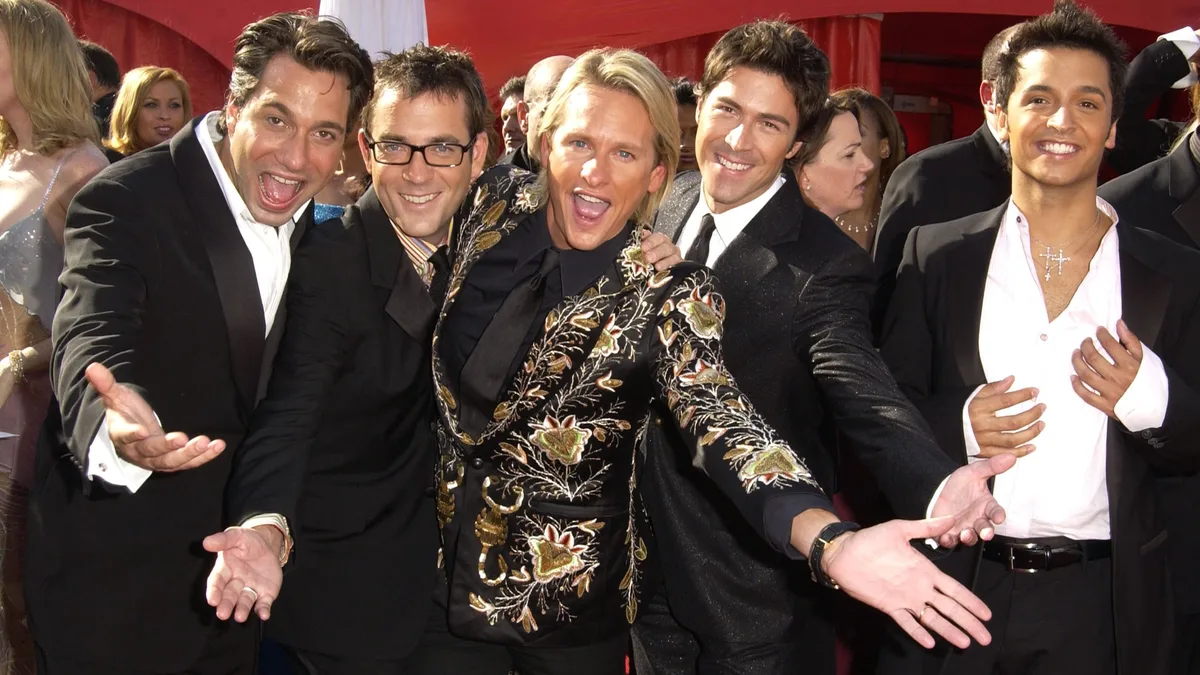
Before there were any Real Housewives , there were five gay guys with impeccable style, loud personalities, and an implacable mission for men to cuff their dress shirt sleeves.
“You’ve not heard the Queer Eye for the Straight Guy story?” David Collins gasped with a certain giddy disbelief when we connected over Zoom.
Collins created the series with his creative partner and then-husband Michael Williams, through their company Scout Productions, which, two decades later, is now behind Hulu’s House of Stassi , which follows Vanderpump Rules lightning rod Stassi Schroeder, and TLC’s series chronicling a Christian community of OnlyFans creators, Double Lives of Suburban Wives.
He’s eager to discuss Queer Eye’s legacy and its often overlooked impact on Bravo’s rise, but first must come the origin story.
Shortly after 9/11, Collins and Williams attended Open Studios in the South End “gayborhood” of Boston, where artists open up their galleries: “You have a little glass of wine, you eat cheese, and you look at their art,” Collins said.
There were about 200 people inside this particular space, and as soon as Collins and Williams walked in, a hush came over the room.
In the middle of the crowd, rendering everyone quiet, was a woman “just berating the heck out of her husband,” he said.
5News aggregated this summary from the outlet’s public feed. The full article, with all the context, is on www.thedailybeast.com — the content belongs to The Daily Beast.