Can Venus cast a shadow? Here's how to see it for yourself
Can Venus cast a shadow? With Aug.
12's total solar eclipse — where the moon's dark silhouette is everything — now behind us, it's a good time to test another kind of celestial shadow.
Astronomical folklore has it that the second rock from the sun, Venus , is, after the sun and moon, the third object able to cast a shadow when it's near peak brightness, albeit extremely faint, according to EarthSky .
Is it true? Not in a city, where skylights glow and porch lights blaze, where shadows are mostly thrown by passing cars that appear to become the brightest object in the solar system briefly.
Venus does cast a shadow, but the sky must be very dark, transparent and free of any light — apparently.
Timing is everything.
Having reached dichotomy — its half-lit phase — on Aug.
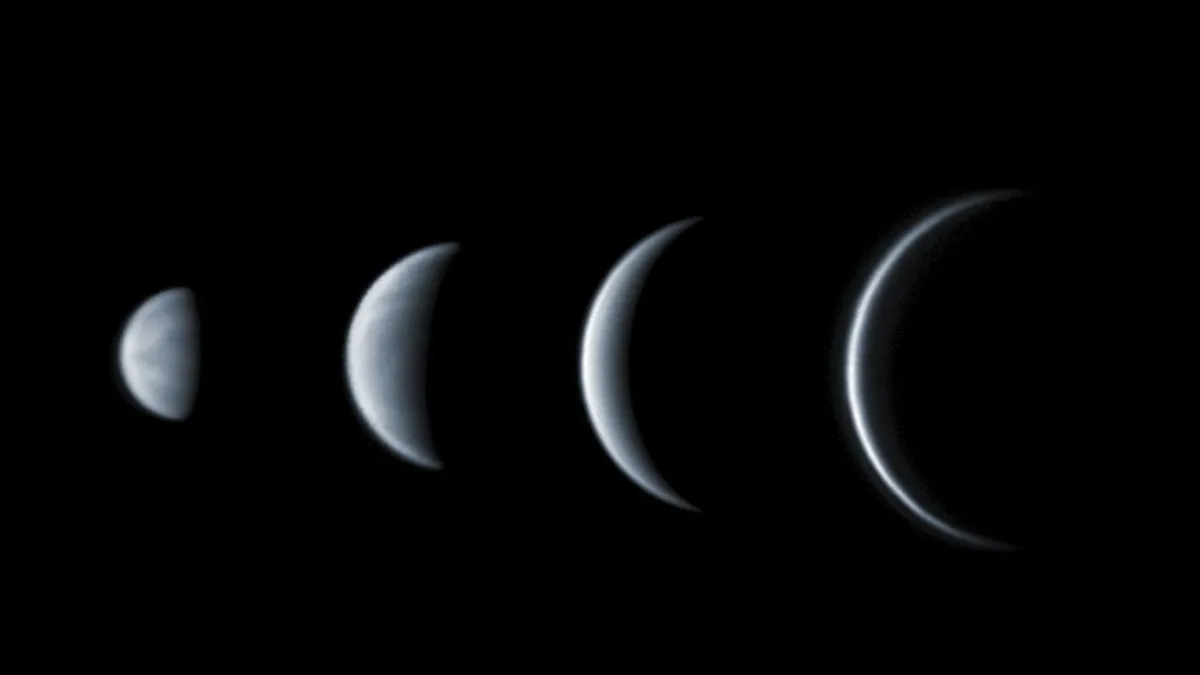
12, Venus is currently 49%-lit and waning as it moves closer to Earth, increasing in angular size as it becomes a slim crescent.
Cue a surge in brightness, thanks to its reflective clouds and its closeness.
Shouldn't it be brightest when it's "full?" No, because it's an inferior planet — i.e., it orbits closer to the sun — so it's fully lit only when it's on the other side of the sun from Earth, when its disk appears at its smallest.
What’s happening and when to look Venus is beautifully placed this week because it reaches greatest eastern elongation, its widest apparent separation from the sun in the evening sky.
Look low in the west after sunset — Venus will be the bright white "star" that appears before the fainter stars even have a chance.
On Aug.
14-15, it sits about 46 degrees from the sun and shines at a magnitude of -4.3 to -4.4, bright enough to dominate twilight but not quite at its most impressive stage of the apparition.
5News aggregated this summary from the outlet’s public feed. The full article, with all the context, is on www.space.com — the content belongs to Space.com.