1,700-year-old church discovered under a lake in Turkey may be the location of the First Council of Nicaea — but other experts disagree
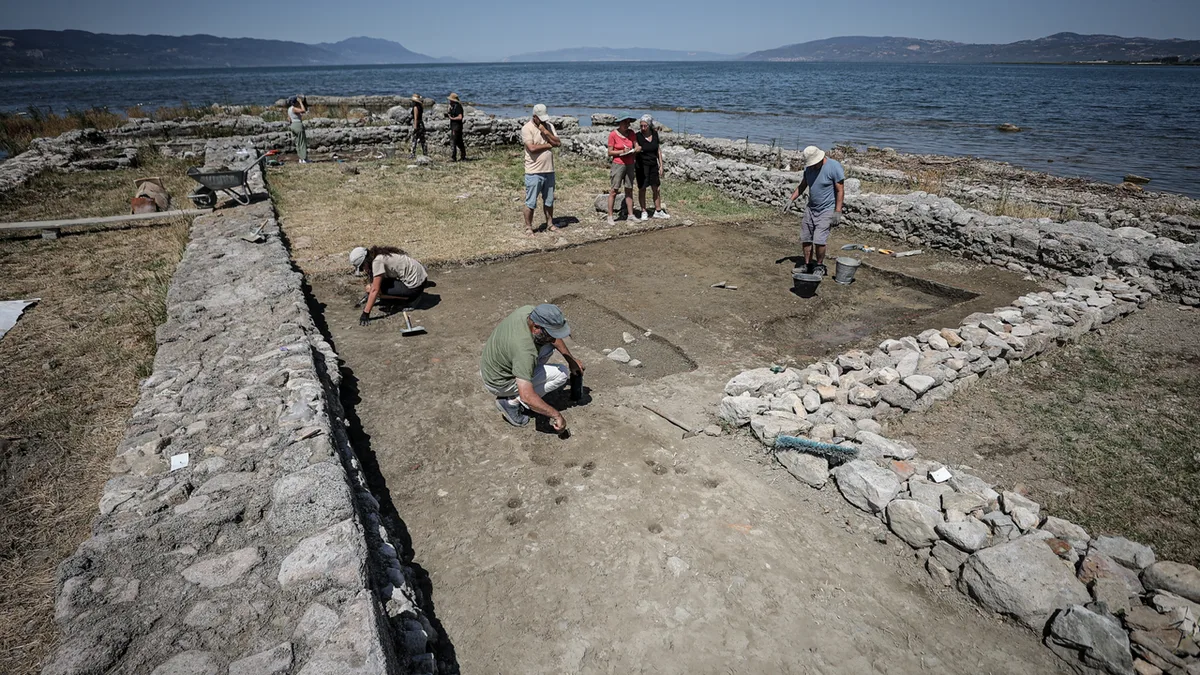
Archaeologists say they have discovered the site where the First Council of Nicaea was held, an important gathering of Christian bishops in A.D.
325, according to the archaeologist who's leading the excavations.
However, some experts who were not involved in the excavations have questioned this interpretation.
Nicaea was an ancient Greek city located in what is now Turkey, by the shore of Lake İznik (also known as Lake Nicaea).
The First Council of Nicaea, held in A.D.
325, brought together Christian bishops who aimed to settle theological differences and adopted what is now known as the Nicene Creed , a core statement of Christian beliefs.
At that time, Constantine I (who lived circa A.D.
272 to 337) was emperor of the Roman Empire .
He had legalized Christianity, and historical sources suggest he played a leading role in organizing the council.
Archaeologists discovered a larger church beneath Lake İznik in 2014.
Since 2015, excavations have gradually revealed the remains of a smaller church beneath the larger one.
The team found a pavement floor from the smaller church that it is about a foot (30 centimeters) below the basilica, suggesting that the smaller church is older, said Mustafa Şahin , an archaeology professor at Bursa Uludağ University in Turkey who is leading excavations at the site.
One of the council attendees, named Eusebius of Caesarea, "explicitly states that the meeting took place in a 'house of prayer' or a small church," and this newly discovered church fits that description better than the basilica, Şahin said.
His team hasn't determined the dimensions of the smaller church.
5News aggregated this summary from the outlet’s public feed. The full article, with all the context, is on www.livescience.com — the content belongs to Live Science.