Can cuttlefish hypnotize their prey?
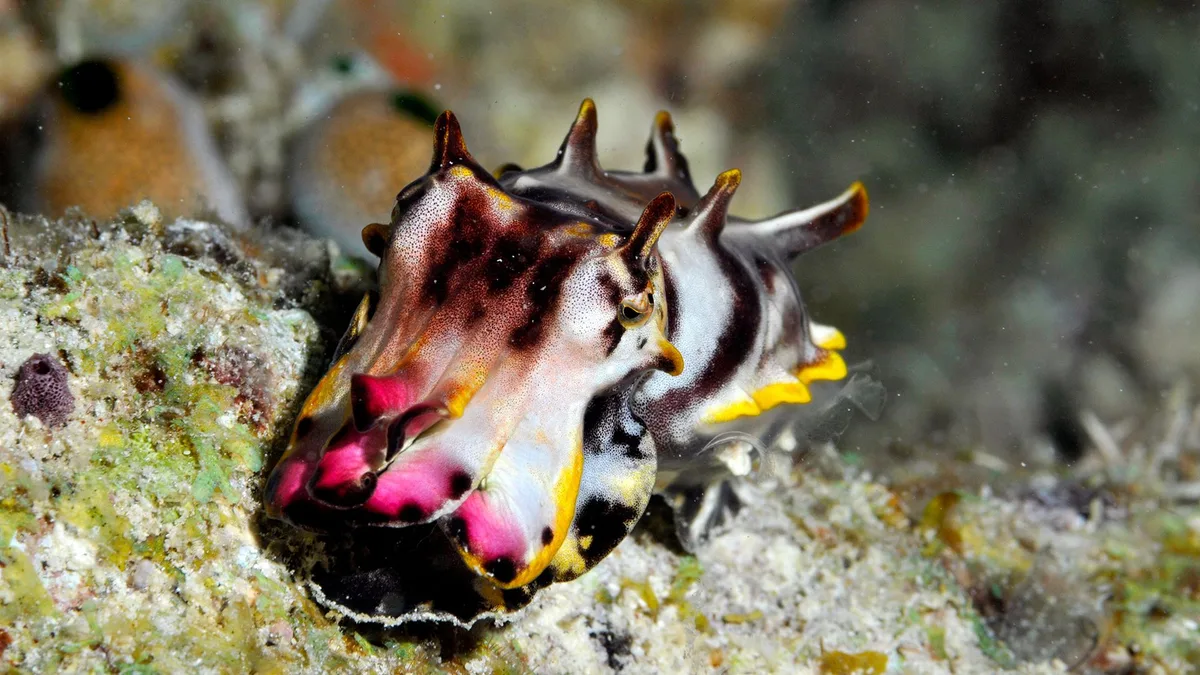
Like their cephalopod cousins the octopuses , cuttlefish are masters of disguise.
As they hunt, these marine predators send waves of color across their skin.
The rainbow display stops prey in their tracks, granting the cuttlefish just enough time to shoot out two specialized hunting tentacles at lightning speed and snatch them into range of their deadly beaks.
But can cuttlefish actually mesmerize prey with their colorful skin changes? Or is something fishier at play? Experts told Live Science that cuttlefish are ingenious hunters, but that there's likely an even more mysterious process than hunter to prey hypnosis going down on the seafloor.
A calculated hunter Cuttlefish are visual hunters , using their large, complex eyes to locate and track potential meals.
In general, their strategy involves a slow, stealthy approach, said Bret Grasse , the manager of cephalopod operations at the Marine Biological Laboratory in Woods Hole Massachusetts.
"The cuttlefish will slowly approach the prey so as to not alert the unsuspecting shrimp, fish or crab," Grasse told Live Science in an email.
During their approach, cuttlefish often put on a showy display, producing moving bands across their body.
These displays are produced by a combination of light-reflecting pigment cells known as iridophores, leucophores and chromatophores.
These cell types contract and expand to produce specific colors and patterns, all within milliseconds.
Some may wonder whether this trick can mesmerize prey, but scientists don't think that's the case.
Hypnosis, defined as a mental state of increased relaxation and altered awareness, is thought to be a uniquely human psychological state .
There is very little research on whether fish can be hypnotized, but a 2005 study found that pushing a steady stream of water through the snapper ( Chrysophrys auratus ) put them in an immobile state similar to being hypnotized.
Another study looked at sedative hypnotic drugs like benzodiazepines and barbiturates and their effects on zebrafish, finding that the fish had molecular receptors for these drugs, which helped render them immobile.
5News aggregated this summary from the outlet’s public feed. The full article, with all the context, is on www.livescience.com — the content belongs to Live Science.