Neanderthals passed on a gene that helps modern humans pack on more muscle — but only a few people have it
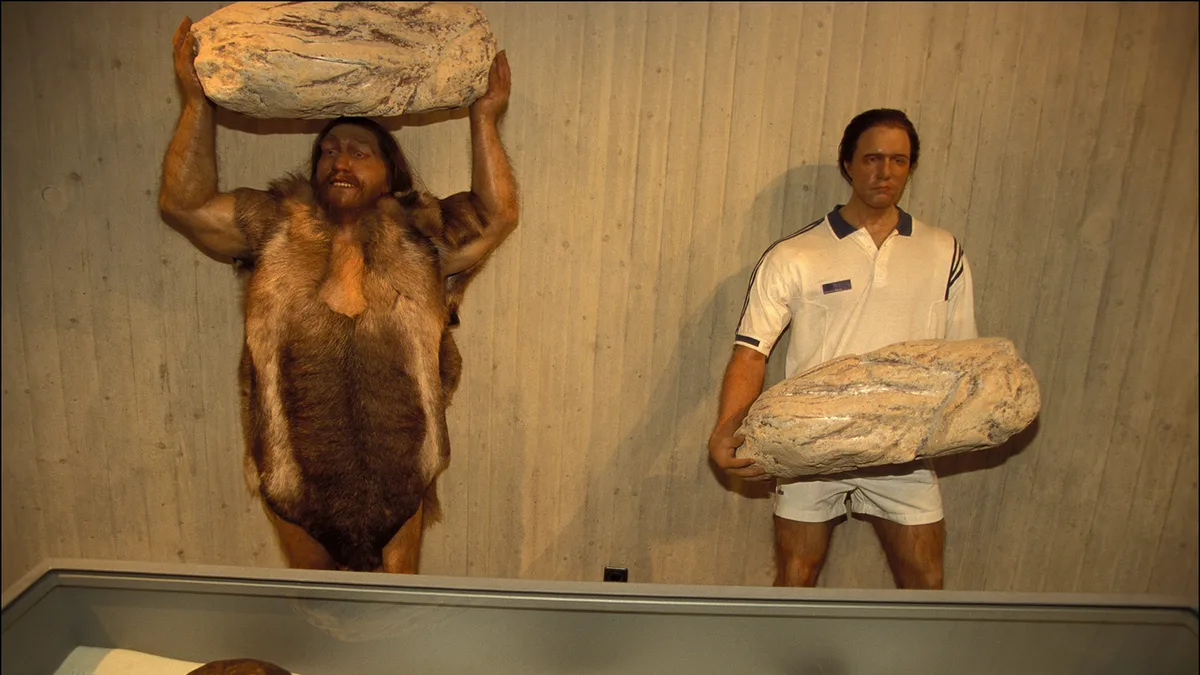
Tens of thousands of years ago, Neanderthals mated with modern humans and passed along a gene variant that enables us to pack on more muscle, a new study finds.
Researchers found that this specific Neanderthal gene, a variant of the growth hormone receptor gene, causes cells to respond strongly to growth hormone.
The Neanderthal version of the gene creates a growth hormone receptor with two amino acid changes and one deletion, compared with the typical receptor in most modern humans.
The researchers think it entered the modern human gene pool through interbreeding, probably about 47,000 years ago .
"The most noticeable characteristic would likely be greater muscle mass, around 270 grams [9.5 ounces] per copy of the variant," study co-author Hugo Zeberg , a geneticist at the Karolinska Institute in Sweden, told Live Science in an email.
"A person who inherited two copies, one from each parent, could therefore have more than half a kilogram [1.2 pounds] of additional muscle mass." The study, published Aug.
5 in the journal Cell , found that almost all Neanderthals had this gene variant, but only about 10% of modern humans do.
Certain modern human groups were more likely to have it, with the variant showing up in about 1% of modern people with European ancestry, and up to 25% of those with Southern Asian or Southeast Asian ancestry.
It does not seem to appear in people of African ancestry, possibly because the interbreeding happened in Eurasia.
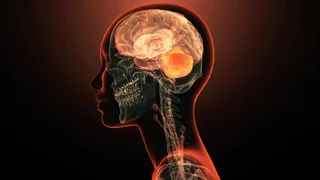
Growing cells Human growth hormone is produced naturally by most people in the brain's pituitary gland, and it stimulates growth in children and adolescents.
Some people have too much or too little human growth hormone , but most of these cases can be medically treated for it .
The pituitary gland is also essential in adults for producing hormones that have several roles, including regulating metabolism, stimulating ovulation in ovaries, and stimulating testosterone production in testicles.
In the study, the researchers studied 10 samples of Neanderthal DNA and two samples of Denisovan DNA from archaeological sites in Europe, the Balkans, Siberia and Asia. (The Denisovans were closely related to the Neanderthals.) They compared their results to modern biobanks that store more than 1.1 million human genomes and related physical data, to understand the effects of the gene variant.
The researchers next tweaked cells in the laboratory to express the regular and Neanderthal variants of the gene, and found that the Neanderthal cells multiplied about 40% more often than regular cells when flushed with growth hormone.
5News aggregated this summary from the outlet’s public feed. The full article, with all the context, is on www.livescience.com — the content belongs to Live Science.