Elon Musk and Sam Altman claim we've reached the AI singularity. But how would we even know that happened?
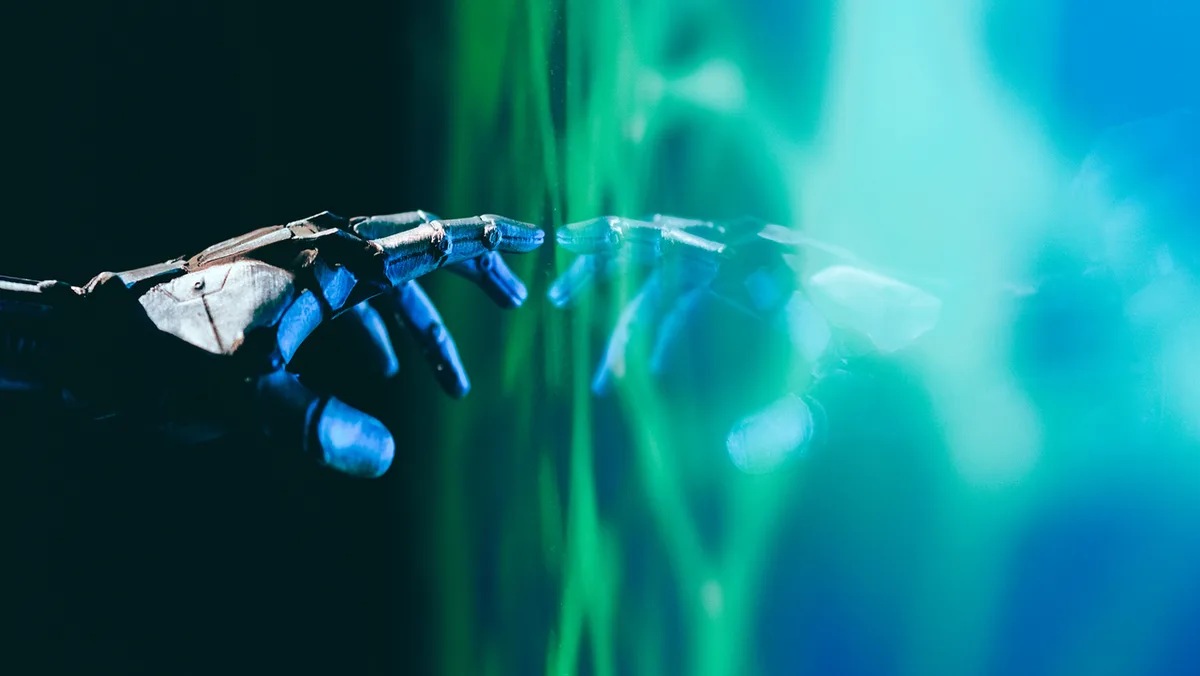
Artificial intelligence (AI) may have already reached the "singularity" — the long-theorized threshold beyond which humans cannot predict the technology's advancement, prominent AI executives such as Elon Musk and OpenAI founder Sam Altman have said.
In a post on social media platform X , Musk pointed to a number of recent incidents of AI systems exceeding their previously assumed limits, including hacking external systems and completing previously unsolved math problems .
First conceptualized by mathematician and Manhattan Project scientist John von Neumann in the 1950s and popularized by science fiction, "the singularity" refers to an inflection point beyond which the evolution of technology becomes impossible for humanity to predict or control.
While definitions vary, the term is most often applied to AI, with the arrival of artificial general intelligence (AGI) viewed as its primary catalyst.
The emergence of AGI — a future AI system that can exhibit human-level cognitive function and reasoning across any discipline rather than a specifically trained subset — represents a significant milestone for the technology.
It is the point at which an AGI system could recursively improve its own capabilities, which some say will trigger artificial superintelligence (ASI) as it moves along an exponential curve and quickly exceeds the intelligence of its creators.
Elon Musk has pointed to a string of recent AI achievements in math and computer science as evidence for reaching the singularity.
But experts aren't convinced. (Image credit: Andrew Harnik via Getty Images) According to a 2025 study that analyzed over 8,000 predictions from AI experts, entrepreneurs and scientists, some believe there is a roughly 50% probability that human-level AGI will be reached within a few decades .
Some figures — including Google DeepMind co-founder and chair Demis Hassabis — suggest we're in the early stages of the singularity already.
In his 1993 essay, " The Coming Technological Singularity: How to Survive in the Post-Human Era ," sci-fi author and mathematician Vernor Vinge — who was also one of the first to explore the concept of cyberspace — examined the question of how the singularity might manifest and the symptoms by which society might recognize its imminent arrival.
"Since it involves an intellectual runaway, it will probably occur faster than any technical revolution seen so far," he wrote.
"The precipitating event will likely be unexpected —- perhaps even to the researchers involved." Breaking boundaries Unexpected events have been rife in the AI community in the past several months.
5News aggregated this summary from the outlet’s public feed. The full article, with all the context, is on www.livescience.com — the content belongs to Live Science.