What Is Humanity’s Place in the Cosmos?
Subscribe here: Apple Podcasts | Spotify | YouTube For all of history, humans have been fascinated by the heavens above us.
We’ve used the stars to navigate Earth, to predict the future, and to understand our place in the larger scheme of things.
Changes in our view of the cosmos—from the Copernican revolution that “uncentered” the Earth to the discovery of the Big Bang and the recognition that the universe is expanding—have invariably changed our view of ourselves.
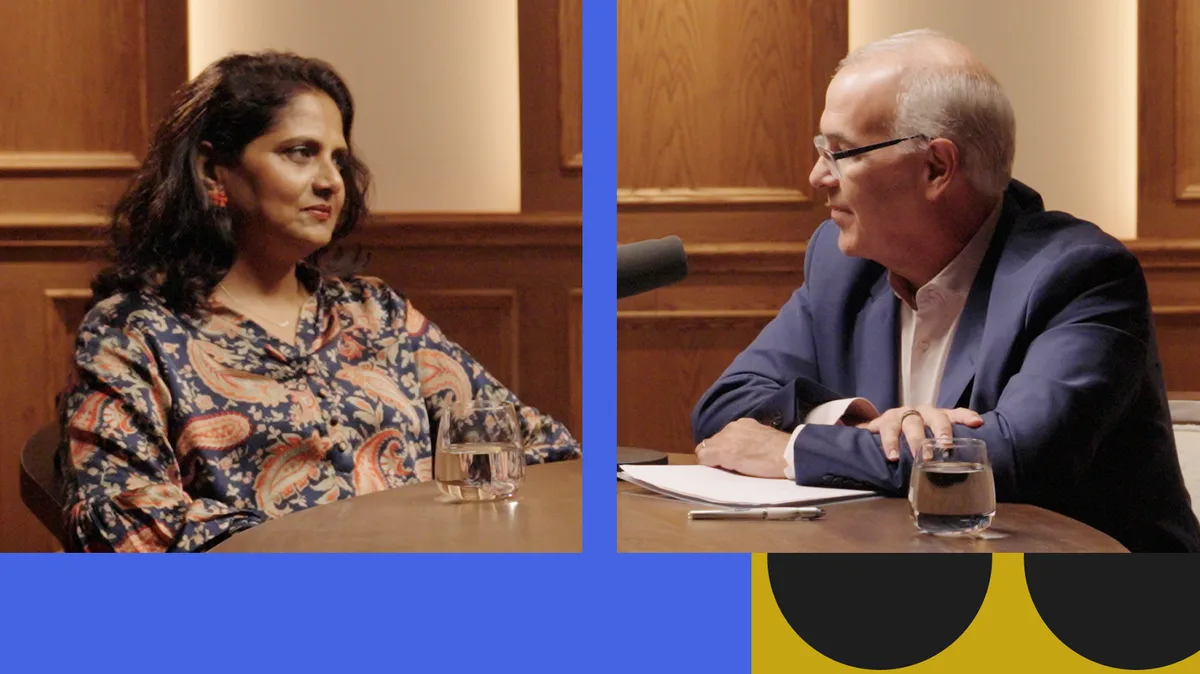
In this episode of The Permanent Questions , David Brooks speaks with the astrophysicist Priyamvada Natarajan about the latest scientific view of the universe and what it says about humanity’s place in the order of things.
Natarajan is a world-renowned theoretical physicist who has made important breakthroughs in the study of black holes and dark matter; she is also a scholar of the history and philosophy of science and the author of Mapping the Heavens: The Radical Scientific Ideas That Reveal the Cosmos .
Along the way, David and Natarajan discuss the place of emotion in scientific research, why science alone can’t solve human problems, and the greatest space movie ever made.
The following is a transcript of the episode: David Brooks: I was like any other 8-year-old.
I looked up into the night sky, and I was transfixed.
I put posters of the solar system on my bedroom wall.
I taped up photos of nebulae and eclipses.
I decided in second grade I was gonna be an astronomer.
I think kids like things that are big, like space and dinosaurs, because they feel small.
But I think we’re also drawn to space because it’s awesome, and I mean that literally.
It evokes awe.
5News aggregated this summary from the outlet’s public feed. The full article, with all the context, is on www.theatlantic.com — the content belongs to The Atlantic.