Scientists develop new method for deciphering ancient scrolls
The Vesuvius Challenge is an ongoing project that combines "digital unwrapping" with crowdsourced machine learning to decipher the so-called Herculaneum scrolls, badly charred 2,000-year-old papyri too fragile to be physically unrolled.
The effort just got an additional boost.
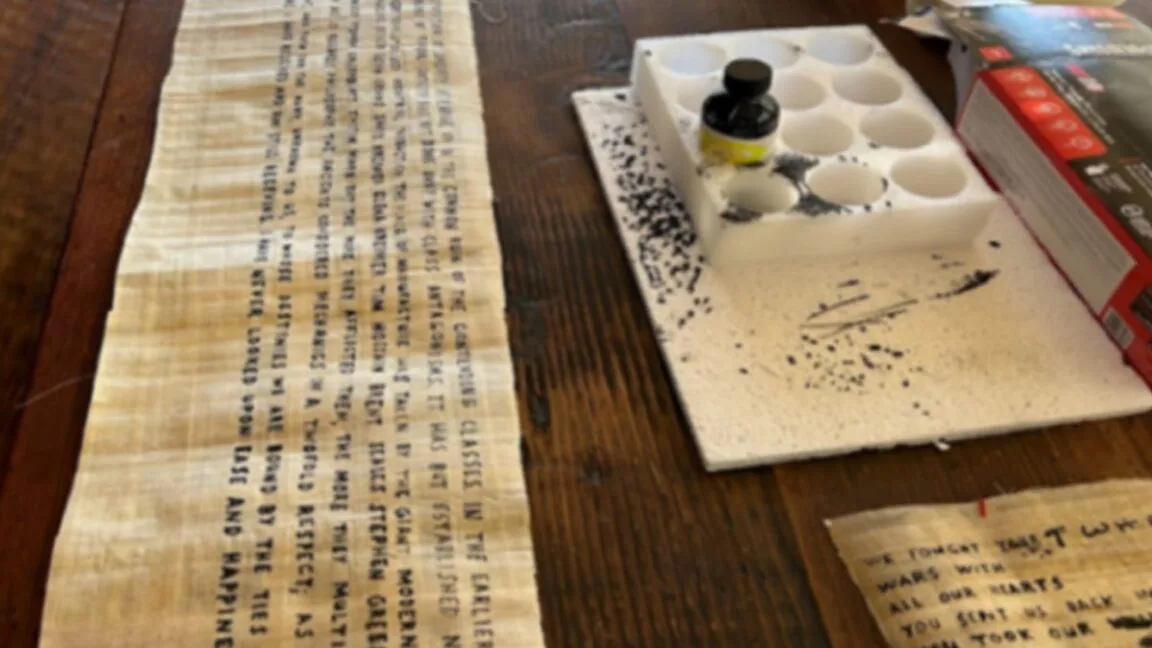
A team of researchers created their own contemporary model papyrus scrolls—charring them just like the originals—to validate a screening method to determine which of the Herculaneum scrolls were written in lead-based ink and hence are the most promising candidates for further analysis.
They described the process in a new paper published in the journal PLoS ONE.
As previously reported , the ancient Roman resort town of Pompeii wasn’t the only city destroyed in the catastrophic 79 AD eruption of Mount Vesuvius .
Several other cities in the area, including the wealthy enclave of Herculaneum, were fried by clouds of hot gas, called pyroclastic pulses and flows.
But still, some remnants of Roman wealth survived.
One palatial residence in Herculaneum—believed to have once belonged to a man named Piso—contained hundreds of priceless written scrolls made from papyrus, singed into carbon by volcanic gas.
The scrolls stayed buried under volcanic mud until they were excavated in the 1700s from a single room that archaeologists believe held the personal working library of an Epicurean philosopher named Philodemus.
The few opened fragments helped scholars identify various Greek philosophical texts, including On Nature by Epicurus and several by Philodemus himself, as well as a handful of Latin works.
But the more than 600 rolled-up scrolls were so fragile that it was long believed they would never be readable, since even touching them could cause them to crumble.
Read full article Comments
5News aggregated this summary from the outlet’s public feed. The full article, with all the context, is on arstechnica.com — the content belongs to Ars Technica.