Can a vehicle wrap hide your car from Flock cameras?
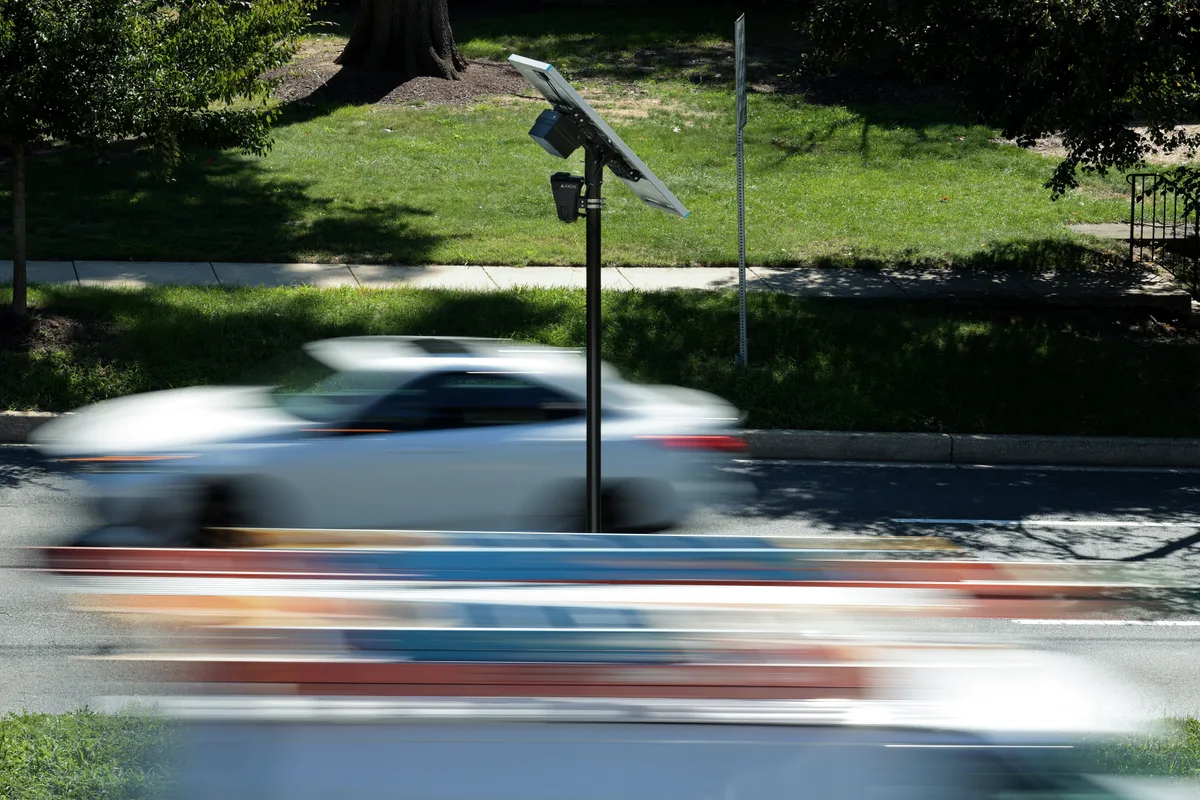
Could a solution to the ever-growing surveillance network across the U.S. be as simple as some garish attire? Start-up noRecognition believes so, and they're taking on Flock cameras next.
Started by cybersecurity researcher Bill Swearingen, noRecognition has devised computer-generated patterns that purport to render objects (and people) nearly invisible to AI-powered detection.
The anti-AI designs can be applied to T-shirts, hoodies, and head buffs for anonymous wearers; the merch is sold in limited quantities with unrepeatable designs that trip up surveillance tech, according to the company.
As communities around the U.S. cry out against Flock's surveillance apparatus , noRecognition has proposed adding their special designs to the world of car customization.
It's a bid to fool Flock's AI-powered automatic license plate readers (ALPRs), which have generated a vast trove of personal information, profiles, and other data that can be used by state authorities.
SEE ALSO: ICE bans agents from using Meta smart glasses, but wants to build its own Swearingen debuted a proof-of-concept car — a 2009 Toyota Yaris decked out in an abstract blue and yellow wrap — at the Aug.
6 Def Con cybersecurity conference in Las Vegas. noRecognition's patterns have been stress-tested against 11 open source detection algorithms, Swearingen explained in an interview with TechCrunch , including the software that powers Flock and law enforcement body cameras built by Axon.
He told the publication he was inspired to design and test the car wrap after noticing a wave of surveillance cameras in his hometown.
"Privacy is a fundamental right," he said.
This Tweet is currently unavailable.
It might be loading or has been removed.
How do adversarial patterns work? noRecognition is harnessing a growing anti-AI strategy known as adversarial media or or "adversarial noise." Commonly, this takes the form of malicious data injected into an image or video, which then exploits an AI's algorithmic vulnerabilities and forces it to misclassify the object depicted.
But these attacks can also work in live time, proponents say, in the form of patterns that similarly confuse machine learning as the image is being taken.
Adversarial patterns or designs still allow wearers to be recorded by AI surveillance systems, but the patterns — made up of specific arrangements of shapes and colors often designed by machine learning itself — similarly confuse computer vision detection systems.
5News aggregated this summary from the outlet’s public feed. The full article, with all the context, is on mashable.com — the content belongs to Mashable.