Eurovision Bars Warring Countries From Hosting
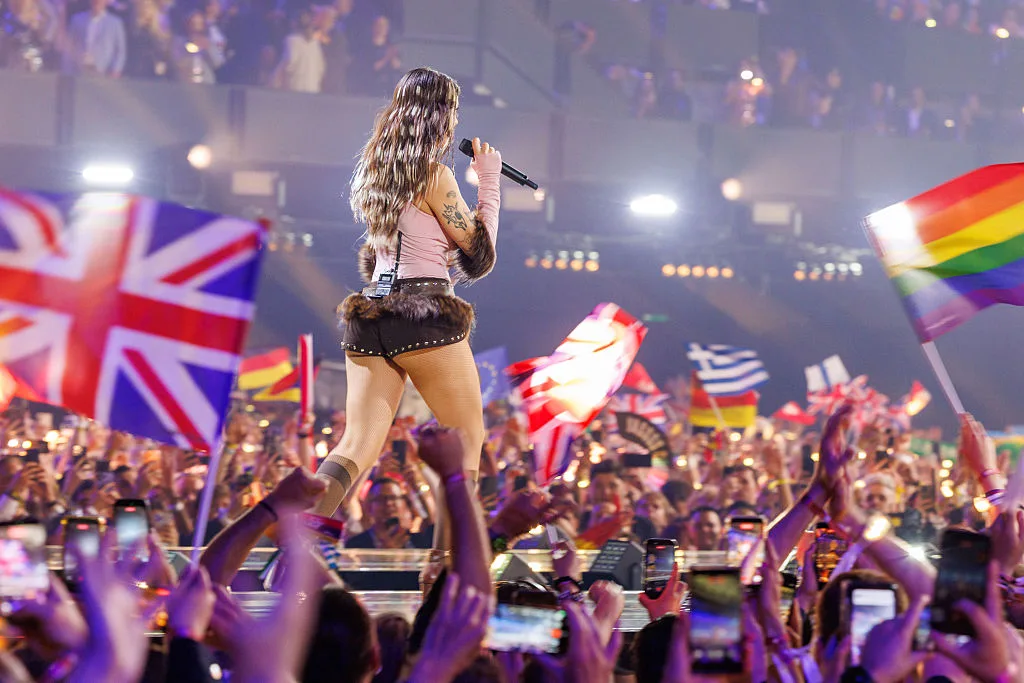
Winner Dara from Bulgaria with the song "Bangaranga" performs again after her victory in the final of the 70th Eurovision Song Contest in Vienna, Austria, on May 17, 2026. —Jens Büttner—picture alliance/Getty Images Eurovision, the world’s biggest international song contest, will no longer allow countries at war to host the competition.
The winning country typically hosts the next year’s competition, but under the new rules, the winning country will “automatically be ineligible to host the contest if an armed conflict, a sensitive geopolitical situation, or any other situation materially affects the security, safety or stability of their state or immediate region,” Eurovision song contest organizers announced on Wednesday.
The change comes after several European countries boycotted this year’s competition over the inclusion of Israel.
Israel came second in both the 2025 and 2026 contests, raising questions about whether it would be allowed to host if it won.
The contest’s governing body approved the amendment after receiving feedback from participating broadcasters.
“These changes are about giving everyone involved greater clarity, protecting artists and ensuring the contest continues to provide a safe and welcoming environment, while preserving the spirit and integrity that make the Eurovision Song Contest so special,” Martin Green, director of the Eurovision Song Contest, said in a statement.
Eurovision organizers made several more changes to the competition’s rules, including raising the minimum age for performers as of the first day of rehearsal from 16 to 18.
Controversy Five countries—Spain, Iceland, Ireland, the Netherlands, and Slovenia—boycotted this year’s competition in Vienna, Austria, in May after the European Broadcasting Union refused calls to suspend Israel from the contest.
Ireland’s public broadcaster RTÉ said in a September statement that its “participation would be unconscionable given the ongoing and appalling loss of lives in Gaza.” José Pablo López, president of Spain’s public broadcaster RTVE, said that same month that “it was about time to break the silence within the EBU regarding the genocide in Gaza.” Broadcasters also argued that the competitors of Eurovision are not ordinary performers but representatives of their nations.
Eurovision “is not merely a song contest,” López said.
It’s “the most politicized festival in existence.” The broadcasters’ decision to withdraw from the contest marked the largest multinational political boycott in Eurovision history.
The boycott came amid intense backlash from the public over the inclusion of Israel in the competition despite its military occupation and bombardment of Gaza, which has killed more than 73,000 people since Oct.
7, 2023.
5News aggregated this summary from the outlet’s public feed. The full article, with all the context, is on time.com — the content belongs to TIME.