Why States Are the Key to the Modern Labor Movement
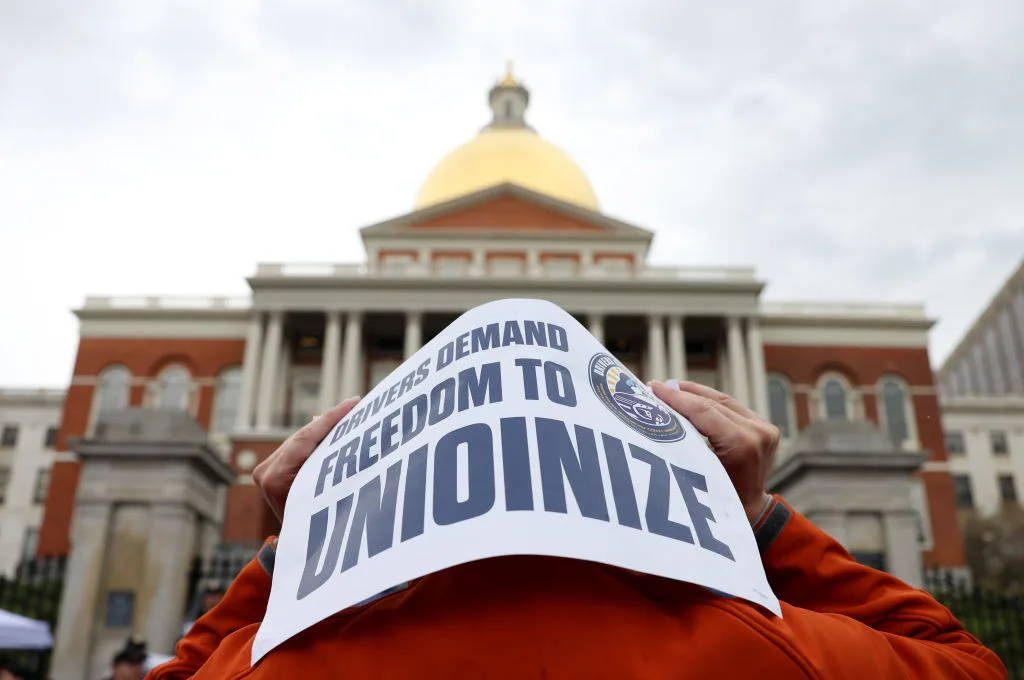
A protester holds a sign during a Drivers Demand Justice rally held to form a driver's union on April 24 in Boston, Massachusetts. —Jessica Rinaldi—The Boston Globe/Getty Images Unions have a history of coming together when workers need them most.
During the Gilded Age of the late 19th century, labor unions sprang up in response to the harsh conditions of the industrial revolution.
In the 1930s, a massive surge in union organizing helped the country find its way out of the Great Depression.
Today, in our Second Gilded Age, gig work is leaving millions of Americans without access to a decent living.
The question is: where are the unions now? Look to the states.
This spring, 70,000 workers won a new union in Massachusetts, the largest union organizing victory since 1941 .
The new App Drivers Union is made up of rideshare workers who have been excluded from key workplace protections.
What’s even more remarkable is that we are about to blow past this milestone.
California recently enacted a law giving more than 800,000 drivers the same right to unionize, and last week the California Gig Workers Union won enough driver support to trigger recognition.
If we embrace this model of industry-wide standard-setting, or “sectoral bargaining,” we could witness the beginning of a new era of expanding worker power .
That’s important because our labor laws are broken.
Collective bargaining in the U.S. has happened primarily at the worksite level since the passage of the federal National Labor Relations Act (NLRA) in 1935 .
Worksite bargaining remains the bedrock of building worker power.
But decades of court decisions eroding workers' rights, relentless employer opposition, the exploitation of complex business structures, and worker misclassification have left worksite-by-worksite organizing incapable of reaching the vast majority of American workers.
5News aggregated this summary from the outlet’s public feed. The full article, with all the context, is on time.com — the content belongs to TIME.