The Other Side of Paradise: How Pakistan Crushed Protests in Kashmir
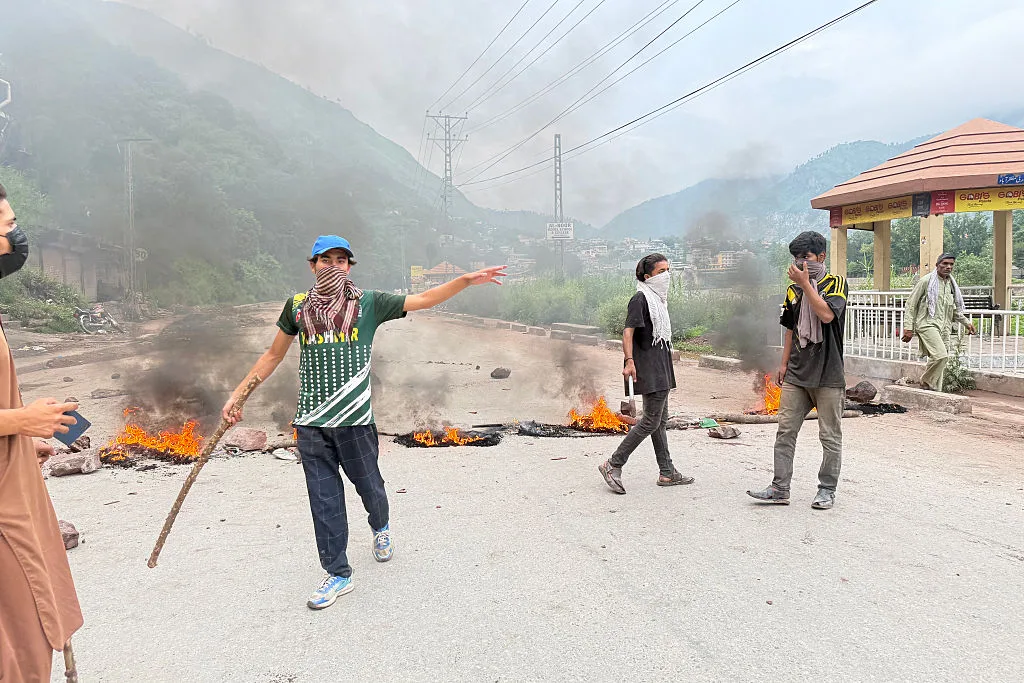
Protestors burn tyres along a road after clashes with police in Muzaffarabad in Pakistan-administered Kashmir on July 31, 2026. —Sajjad Qayyum-AFP via Getty Images Irish poets and American presidents have long spoken of Kashmir: its beauty and its dangers.
The question of Kashmir has shaped the trajectories of India and Pakistan since the end of British rule and their birth as nation-states in August 1947.
Both countries claim Kashmir in its entirety, have fought multiple wars over it, and each controls a separate part of the territory.
Historically, references to Kashmir have largely focused on the dispute between India and Pakistan, or on the most visible troubles in Indian-administered Kashmir.
Global attention has rarely lingered on the part of Kashmir administered by Pakistan.
Yet, since an outbreak of protests in the region in June, more than 80 people have been killed by security forces.
A different kind of political struggle has been gathering momentum there—one that is less a contest over sovereignty than an expression of long-simmering grievances over the conditions of daily life, from unaffordable electricity bills and rising food prices to a scarcity of jobs.
Pakistan-administered Kashmir has not been insulated from the wider economic crisis in Pakistan.
Rising prices, fiscal pressures , energy deficits, and repeated International Monetary Fund bailouts have pushed successive governments to reduce subsidies and raise utility prices.
The people of the region, already squeezed by inflation and unemployment, experience these policies not as fiscal prudence but as evidence of how little influence they have over the decisions that shape their lives.
Kashmir and the making of a protest movement Kashmir is home to major hydropower projects that feed Pakistan’s national grid, and many residents argue that local tariffs should better reflect the territory’s contribution to power generation.
The grievance is not new: protests over rising electricity and basic commodity prices have erupted periodically since 2022.
The failures of the local government to resolve these issues created an opening for a new form of political organization.
Citizens committees emerged across districts, bringing together traders, lawyers, students, and community leaders.
5News aggregated this summary from the outlet’s public feed. The full article, with all the context, is on time.com — the content belongs to TIME.