The surprising post-pandemic drop in income inequality
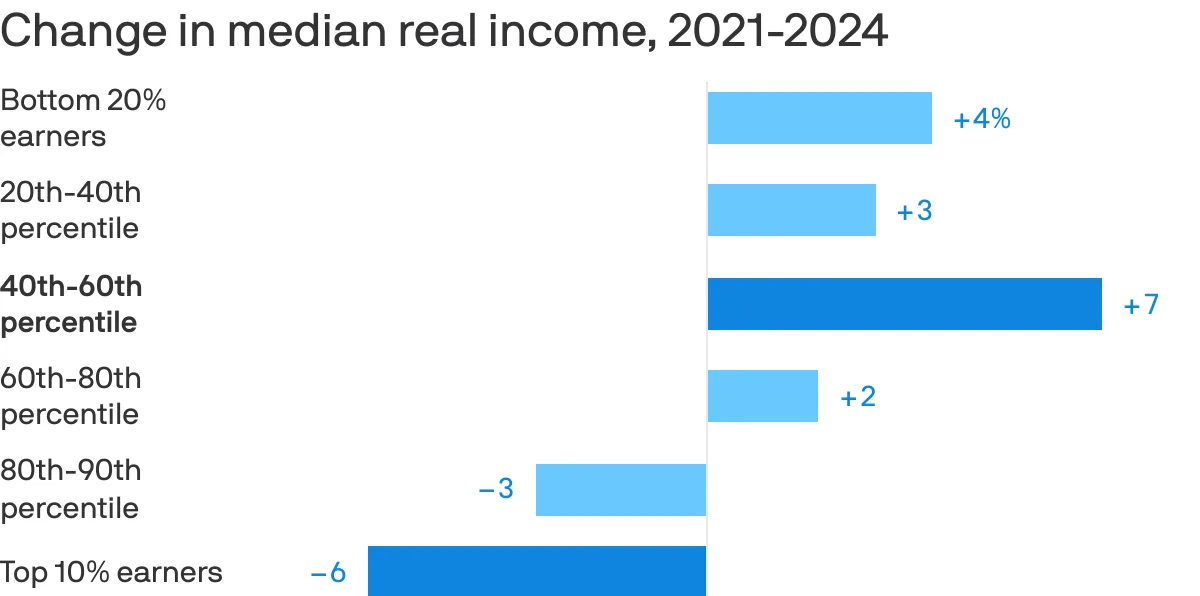
Data: Federal Reserve Survey of Consumer Finances; Chart: Neil Irwin/Axios Middle- and lower-earners' inflation-adjusted incomes rose during the Biden years — but high earners saw their incomes fall.
That's a surprising finding from one of the most thorough datasets on American household finances , released Friday morning by the Federal Reserve.
Why it matters: The data sheds granular new information on a much-contested question: What happened to Americans' real incomes during the post-pandemic period? It featured an exceptionally tight job market and the highest inflation in decades, followed by aggressive Fed rate hikes.
The median American family's income rose 7% in inflation-adjusted terms between 2021 and 2024.
But that masked significant differences among income brackets.
The average real income of families in the top 10% of earners fell 14%, to $652,000 from $757,000 (both figures are 2025 dollars).
That implies, contrary to a common narrative about the K-shaped economy, that income inequality fell during the post-pandemic period.
Yes, but: The story for wealth is very different.
Families that were already wealthy — and tend to own stocks, houses and other assets — became much richer from 2022 to 2025.
Among families in the top 10% of income, median net worth rose a whopping 31% from 2022 to 2025, compared with a 2% rise in net worth for the median family.
Families in the bottom 40% of income actually saw their net worth decline slightly in that span.
The intrigue: The data, from the Survey of Consumer Finances, is collected and released every three years.
Friday morning's release is the 2025 survey — but questions about income cover the preceding calendar year.
As such, the income numbers compare 2024 with 2021 — conveniently capturing the change from the early part of the Biden administration to near its end.
5News aggregated this summary from the outlet’s public feed. The full article, with all the context, is on www.axios.com — the content belongs to Axios.