The Supreme Court Isn’t Interested in Facts

T he Roberts Court is abdicating one of its most important roles, that of truth-teller.
This much was apparent on Monday in Trump v.
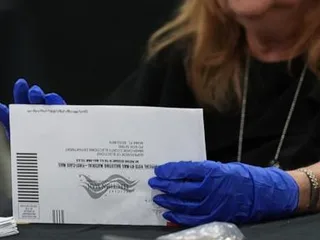
California , when the Supreme Court’s Republican appointees let the Trump administration move forward with a plan to curb voting by mail.
Via the Court’s shadow docket, the justices lifted an injunction against parts of an executive order that President Trump had issued to stop what he believes is the “massive cheating that’s gone on” in American elections, as he said at the Oval Office signing ceremony in March.
The Court’s order is troubling on many axes.
It injects needless chaos into the midterm elections that are a little more than two months away, restoring, at least formally, one of the administration’s chosen tools for hampering a method that millions of Americans use to vote.
It emboldens those already gunning for a more wholesale attack on democratic institutions, a base enthralled by the president’s election lies and White House officials’ willingness to use the machinery of the federal government to preserve their power.
The ruling is also troubling for what it says about the Court and its relationship to facts.
Confronted with an imagined crisis of rampant voter fraud, the Court constructed an illusion of its own.
It reimagined what the executive order did and glossed over the intentions of the man who signed it.
This willingness to both ignore facts and conjure fantasies is not a one-off.
T he mail-in-ballots case grew out of a conspiracy theory that Trump has long promoted: American elections are riddled with fraud on a grand scale, and voting by mail is a chief conduit.
The March executive order was intended to target this supposed problem.
Twenty-three states (along with the District of Columbia) sued, taking issue with three parts of the order. [ Quinta Jurecic: What, exactly, is the Supreme Court thinking? ] The first directed federal agencies to compile “state citizenship lists,” presumably as a precursor to purging voter-registration rolls.
5News aggregated this summary from the outlet’s public feed. The full article, with all the context, is on www.theatlantic.com — the content belongs to The Atlantic.