Will the new moon race turn Earth's nearest neighbor into a dumping ground?
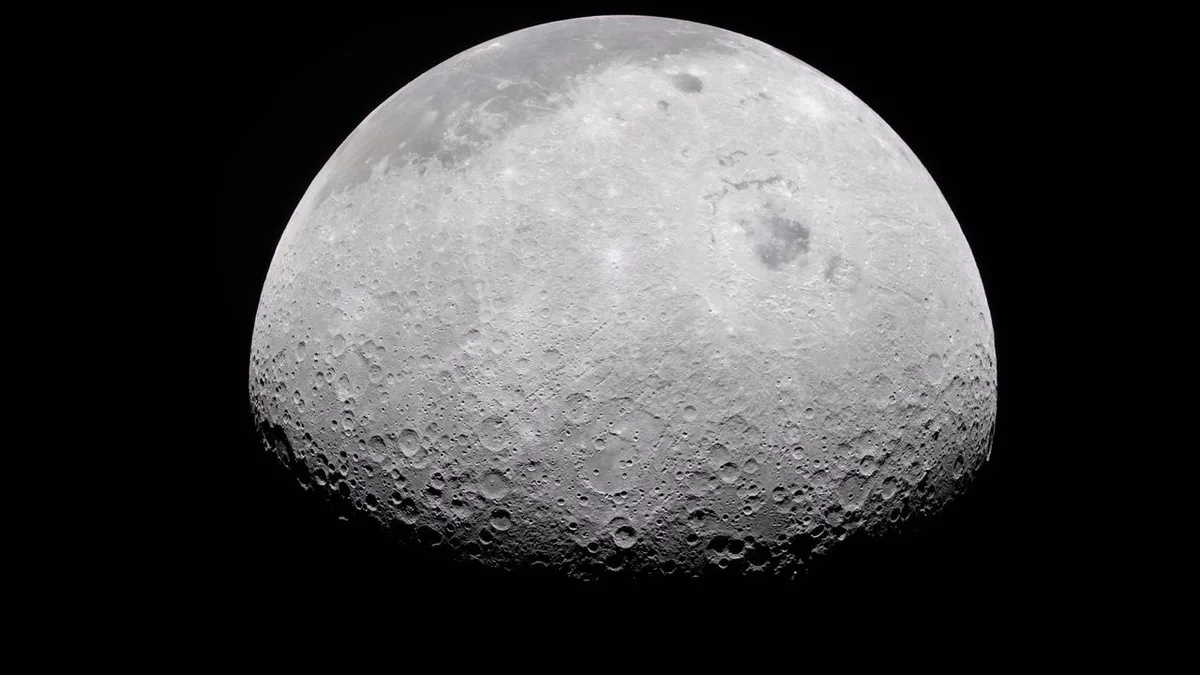
An 8,800-pound (4,000 kilograms) Falcon 9 rocket stage hit the moon last Wednesday (Aug.
5), stirring lunar regolith in a massive plume of dust observable all the way from Earth.
The rocket joined some 3,000 manmade objects scattered on the surface of our planet's companion.
Some experts think it's about time we start treating the pristine lunar environment with a bit more respect .
Around 200 tons of Earth stuff have been either deliberately left on or crashed into the moon since the beginning of the space age.
Some of this material has a prominent place in history books: The descent modules from all six Apollo landing missions, Soviet Lunakhod rovers from the 1970s and China's 2010s Yutu 1 and 2 robots still sit where they had been left or ran out of power.
But there is also a lot of stuff on the moon that wasn't really meant to end up there.
Astronomer and space historian Jonathan McDowell says that many rocket stages and other objects left in orbit between Earth and the moon since the first lunar missions in the 1960s may have ended up on the gray dirt.
Four years before the Falcon 9 upper stage crashed near Einstein Crater, for example, part of a Chinese Long March 3C rocket slammed into the moon's far side.
And experts think such incidents could become increasingly common in the coming years, as exploration of the moon intensifies.
"We're in a transitional moment," McDowell told Space.com.
"From the era when there was rare lunar exploration mostly by the U.S. and the Soviet Union, we've seen over the past decade other nations landing on the moon and the beginning of commercial missions .
But governance has not kept up with this.
We don't have an international set of agreements on how to operate near the moon, how to coordinate activities near the moon, and we're really going to need it because, not only is the amount of activity at the moon increasing, but the number of different players is greatly increasing, too." Human activities on the moon are governed by the 1967 United Nations Outer Space Treaty , Marieta Valdivia Lefort, a policy officer at the Royal Astronomical Society in the U.K., told Space.com.
5News aggregated this summary from the outlet’s public feed. The full article, with all the context, is on www.space.com — the content belongs to Space.com.