Is AI the new China Shock?
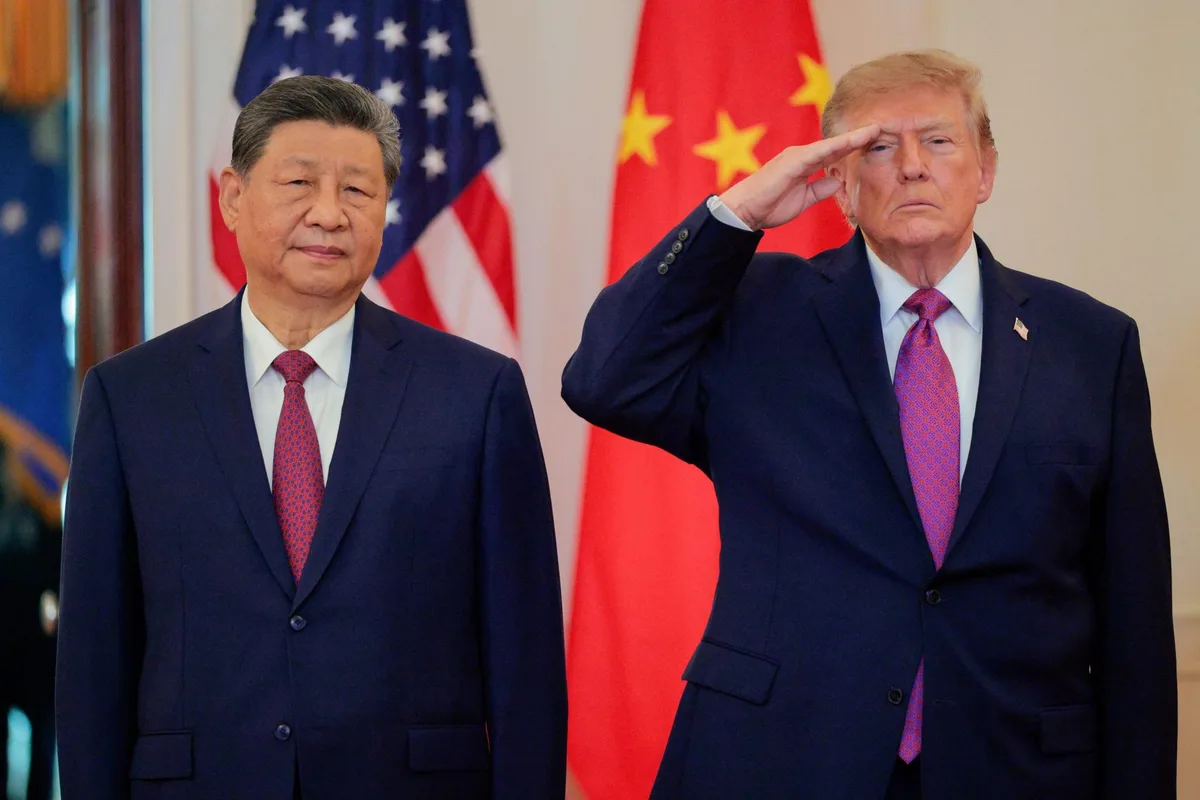
When China joined the World Trade Organization in 2001, that one move set off the largest capital spending boom the world had ever seen.
Investments in factories, machinery, housing and other long-term assets rose from roughly $360 billion in 2000 to $3.2 trillion by 2010.
Adjusted for inflation, cumulative Chinese fixed investment over that decade totaled about $20 trillion.
In the process, China reshaped global trade, commodities, inflation, labor markets and politics for a generation.
Today, another investment surge of comparable magnitude is underway, but most people are still assuming it’s a technology sector story.
They shouldn’t.
The artificial intelligence buildout now rivals China’s post-WTO investment boom in scale, and its consequences will extend far beyond the tech sector.
The numbers are staggering.
U.S. hyperscalers alone — Microsoft , Amazon , Alphabet Meta and Oracle — are projected to shell out roughly $800 billion of capital expenditures in 2026, an 83% increase year over year.
Research firm Gartner estimates global AI spending will surpass $2 trillion this year.
For hard AI capital investment — chips, data centers, power, cooling and networking — estimates cluster around $10 trillion to $15 trillion globally over the next decade.
For broader AI spending, including software, services and AI-enabled products, the 10-year total could approach $30 trillion.
AI is already China-scale on a hard-capex basis.
Under the broader definition, it could be significantly larger than China’s entire 2000–2010 investment surge.
5News aggregated this summary from the outlet’s public feed. The full article, with all the context, is on fortune.com — the content belongs to Fortune.