Princeton’s ‘AI Snake Oil’ author says the real fear isn’t thinking machines—it’s that AI exposes who already knows how to think
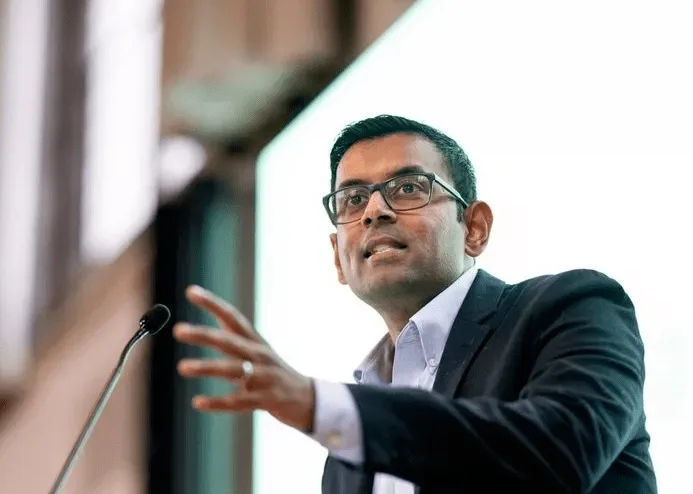
Arvind Narayanan has spent years puncturing Silicon Valley’s grandest claims about artificial intelligence.
The Princeton computer-science professor co-wrote AI Snake Oil , a book that challenges the notion that algorithms can reliably predict who will be a good employee, which patients will get sick, or who might commit crimes.
He has also pushed back on the idea that generative AI is about to eliminate vast swaths of white-collar work, calling work something like a “ sandwich ” whose bun is growing even as the meat shrinks.
But Narayanan does not dismiss the public’s mounting hostility toward AI.
He thinks the backlash is real, understandable—and far more complicated than any one thing.
It’s a coalition of different fears, he said: “many different kinds of anxieties have all kind of pushed together into one sort of generalized opposition to AI.” What looks like AI phobia, he argued, is really a collection of anxieties about fear of job loss; distrust of powerful technology companies; anger over the influence of billionaires; concern about environmental costs; unease over the technology’s social effects; and, for younger people, uncertainty over what skills they need to retain in a labor market increasingly built around AI.
Snake oil, redefined Narayanan’s critique is not that generative AI is useless, or that workers should refuse to use it—and he stressed that his “snake oil” criticism largely does not extend to generative AI.
He said he views AI as a potentially transformative technology that knowledge workers can already use to research, challenge assumptions, analyze data, and build software.
His warning targets a different class of AI claims: systems marketed as capable of making high-stakes predictions about people.
Hospitals, insurers, human-resources departments, and criminal-justice systems have all adopted or considered machine-learning systems meant to forecast future behavior or outcomes.
Narayanan is skeptical of those applications because the future is inherently hard to predict—and because dubious forecasts can drive consequential decisions about hiring, coverage, bail, or policing.
“Generative AI, we do criticize for some of the hype that attaches to it,” he said.
“But we’re also very clear that this is a technology that is very useful for every knowledge worker.” The ‘moral crumple zone’ Narayanan has argued with his sandwich metaphor that the near-term workplace consequence may be more complicated than AI just eliminating jobs: AI can expand the layers of checking, supervision, and verification required to use it responsibly.
In adversarial fields such as law, for instance, one side’s AI-enabled productivity can compel the other side to match it, so the total volume of work keeps expanding rather than shrinking.
5News aggregated this summary from the outlet’s public feed. The full article, with all the context, is on fortune.com — the content belongs to Fortune.