$6 trillion a year in unpaid labor isn’t counted in GDP. Its absence from official stats distorts how we see growth, living standards and productivity
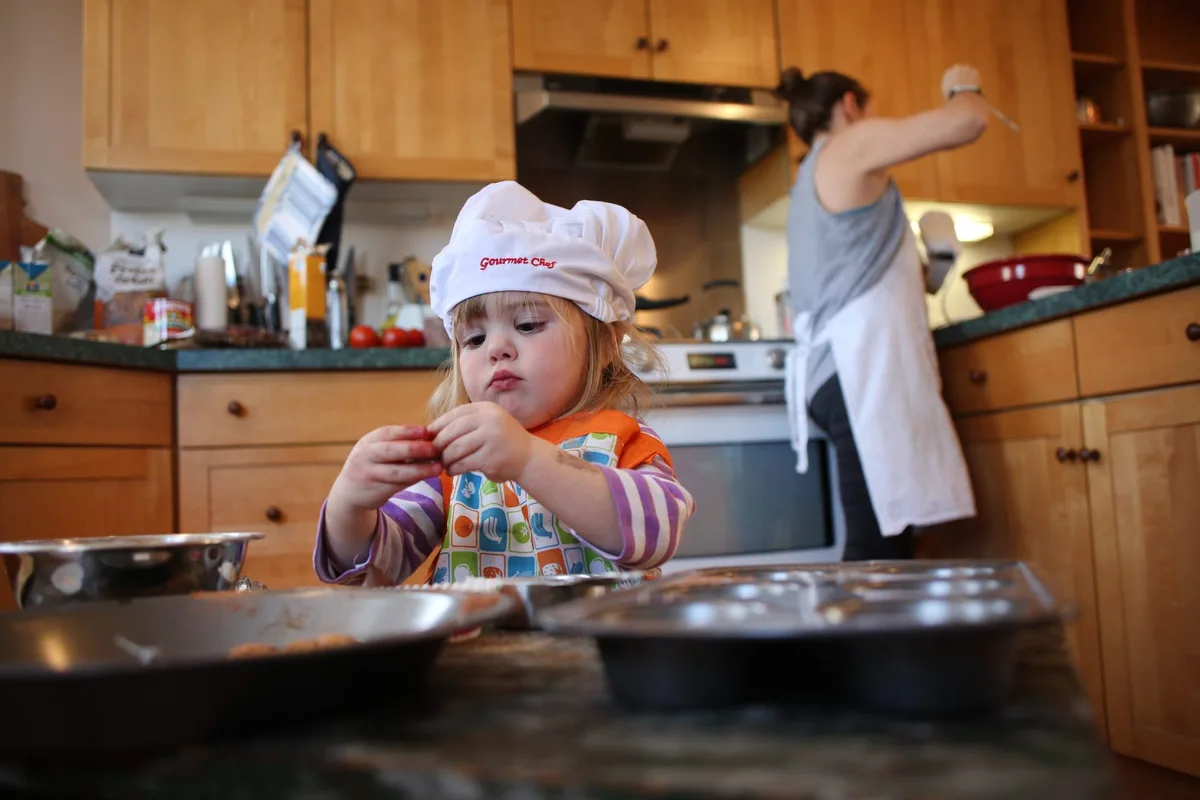
The workday doesn’t end for millions of American workers when they clock out and go home—there are floors to mop, meals to prepare, and kids to tend to.
There’s no paycheck for those chores that keep a household running, but a recent Government Accountability Office (GAO) report estimated the labor is worth up to $6 trillion a year, or one-fifth of GDP.
All that output isn’t counted in GDP because no money changes hands.
Yet, over 87% of Americans age 15 and older did some unpaid household work on a typical day, according to GAO’s September report, spending an average of 3.72 hours on those tasks.
“Without those activities, we really wouldn’t have a functioning formal economy,” Misty Heggeness, an associate professor of economics and public affairs at the University of Kansas, told Fortune .
She said if families stopped cooking and providing childcare themselves, much of that work would have to be bought from the service economy instead.
“The value of the money that we make in our jobs would be reduced because it would be more expensive for us to survive,” she said, “because we would be looking at the formal labor market for those services.” GDP counted one job, but not the other One reason economists care about unpaid household labor is that it changes how economic growth looks over time.
When women’s access to higher education and higher-paid jobs opened up in the 1960s , GDP recorded the gains of when women entered the workforce without accounting for the corresponding loss of household labor, which “artificially boosted” the economy’s growth rate, according to Nancy Folbre, an economist who wrote the book Making Care Work.
GAO found this discrepancy in historical data.
From 1965 through 2020, conventional GDP grew an average of 6.3% a year, while a different measure from the Bureau of Economic Analysis that accounted for household labor showed that average growth was 6.1%.
That gap changes how well-off a household looks on paper.
Folbre noted that a second paycheck technically raises total income for a family, but if working leaves less time to handle necessary tasks at home, families could spend some of that additional income replacing work they once did themselves.
“Just looking at individual earnings or family income without taking into account unpaid work just gives a very misleading picture of relative living standards,” she said.
Who still does the unpaid work Unpaid labor historically fell on the shoulders of the women in the household, and the burden hasn’t disappeared.
5News aggregated this summary from the outlet’s public feed. The full article, with all the context, is on fortune.com — the content belongs to Fortune.