The 'Halloween Fireballs' are coming. Here's what to expect from the Taurids this year
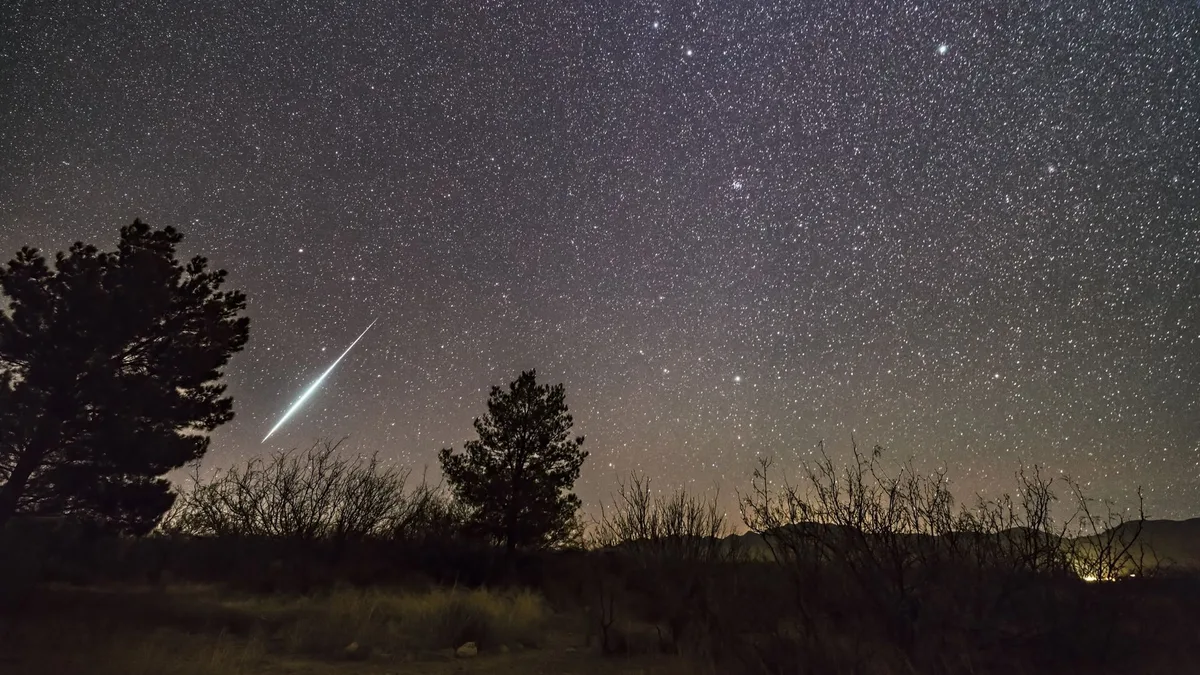
They don't produce anything like the torrent of "shooting stars" associated with August's Perseids or December's Geminids, but the Taurid meteor showers have something else going for them — fireballs.
The Taurids are famous for occasionally producing exceptionally bright, slow-moving meteors that can streak dramatically across the night sky from September to December.
As a bonus, they're visible from both the Northern and Southern hemispheres.
That's because they appear to emanate from the constellation Taurus, which sits close to the ecliptic, the apparent path the sun takes across the sky as Earth orbits around it.
The Taurids are actually two closely related showers — the Southern Taurids and Northern Taurids — whose activity overlaps in late October and November.
That's why they're known informally by skywatchers as the "Halloween fireballs." The broad overlapping peaks make the Taurids less about watching on one particular night and more about keeping an eye on the night sky for several weeks.
Both have their radiant points — the place in the night sky where their "shooting stars" appear to come from — close to the famous Pleiades (M45) open cluster of stars in the constellation Taurus .
There's another tempting reason to watch the Taurids in 2026 — moonlight will cause little interference around the main peaks.
When are the Southern Taurids? The Southern Taurids are already underway.
According to the American Meteor Society , they're active from Sept.
20 through Nov.
20, with two distinct components.
The annual component peaks around Oct.
14, while a component particularly associated with fireballs peaks overnight on Nov.
5News aggregated this summary from the outlet’s public feed. The full article, with all the context, is on www.space.com — the content belongs to Space.com.