Iran’s ‘Anti-Imperialism’ Is a Dead End
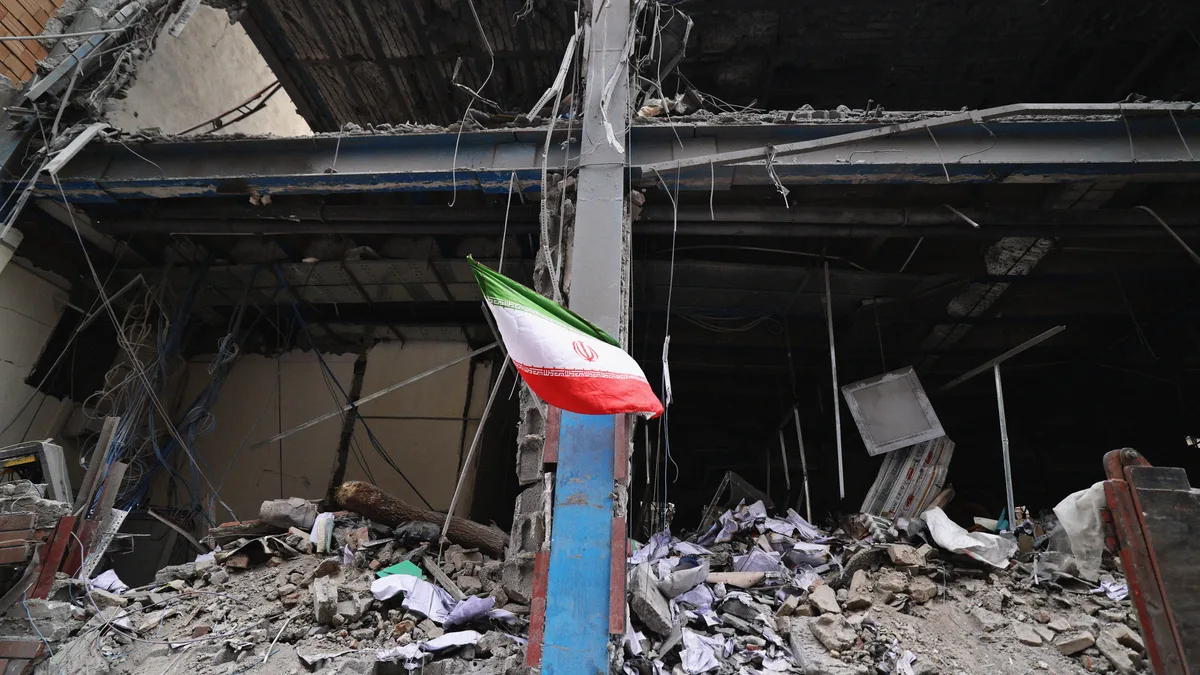
What has the Islamic Republic done for Iranians? Under its rule, citizens have suffered decades of economic decline, sociopolitical repression, and international isolation.
Now the country is engaged in an open-ended war.
In almost every way, Iranians are doing much worse than they were 20 years ago.
Not even the regime’s propagandists can deny these realities.
Many of them therefore insist that the Islamic Republic’s failures are justified by its unbending resistance to American imperialism.
Nearly all of Iran’s economic suffering, defenders say, can be explained as the price of this heroic stance, to which the West has responded with sanctions that have crushed Iran’s standard of living.
But the story of the Islamic Republic’s relationship to American power, and of how that relationship has and has not served the cause of Iranian sovereignty, is more complicated.
Iran’s prerevolutionary ruler, Shah Mohammad Reza Pahlavi, was an anti-communist autocrat who prized ties with the United States.
His successors condemned him as an American stooge and claimed to have freed Iran from its slavish dependence on the “ Great Satan .” In its early days, the Islamic Republic signaled independence from both the Soviet Union and the United States with the slogan “Neither East nor West,” which still adorns the facade of the Ministry of Foreign Affairs headquarters in Tehran.
The foundational anti-imperialism of the new regime was also a promise that Iran would fight for the “oppressed of the world,” as well as a call to resist cultural absorption by the West—a fate one revolutionary intellectual decried as “Westoxification.” [ Read: The battle for Hormuz is not the war ] The Islamic Republic has failed in its anti-imperialism by all of these measures, especially as compared with the monarchy.
Pahlavi was an American ally who owed his throne in part to a CIA-abetted coup that elevated him over a popular prime minister in 1953.
But he sustained Iran’s independence by skillfully playing the United States and its rivals, the Soviet Union and the Eastern Bloc, off of each other when doing so suited Iranian interests.
The Soviets helped build Iran’s ironworks and welcomed the shah as a rare royal to pay a state visit to Communist Moscow.
Pahlavi’s slogan could well have been “Both East and West.” The shah backed the United States in some Cold War battles, but he also threatened to sign security deals with Moscow when he wanted better terms from Washington, and he offered to mediate the conflicts in the Middle East and in Vietnam.
5News aggregated this summary from the outlet’s public feed. The full article, with all the context, is on www.theatlantic.com — the content belongs to The Atlantic.