Windblown yardangs on Mars | Space photo of the day for Oct. 15, 2026
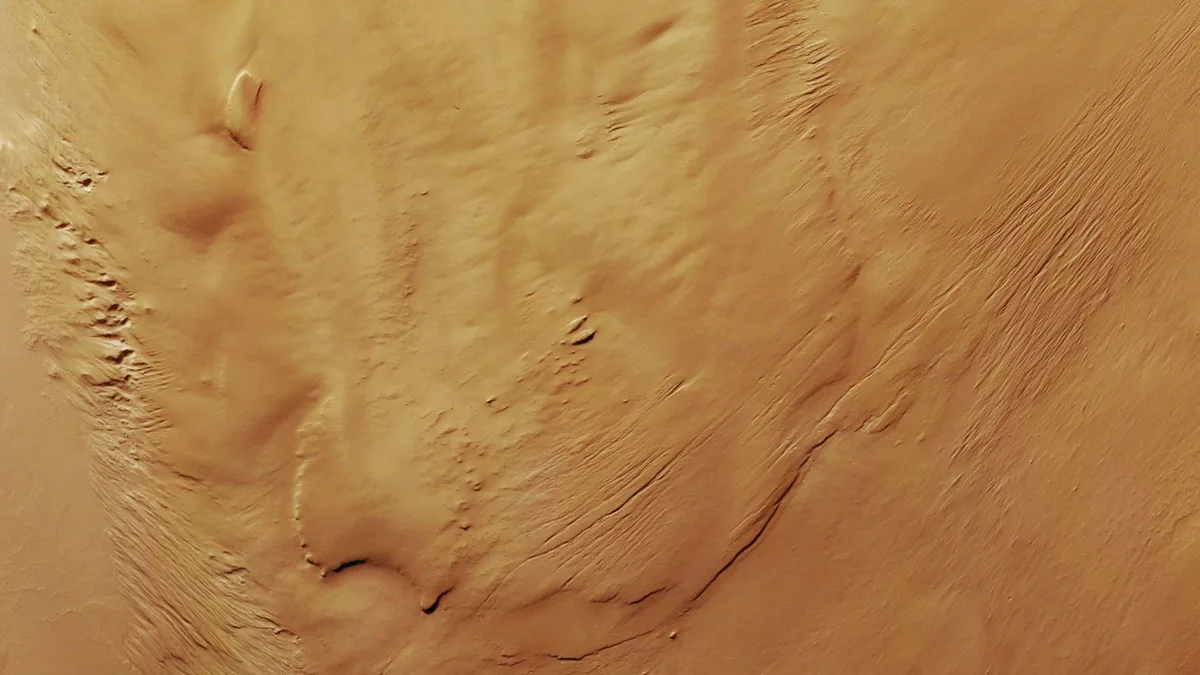
A new image from the Mars Express spacecraft reveals windblown ridges known as yardangs, seen here as wrinkled sections on the left and right sides of the image. (Image credit: ESA/DLR/FU Berlin) A new image from the European Space Agency's Mars Express spacecraft reveals the powerful erosive forces that have shaped and re-shaped the surface of the Red Planet over long periods of geological time.
What is it? This new Mars Express image captures Amazonis Mensa, a large, flat mountain on the Red Planet that offers planetary scientists a glimpse into the many factors that can sculpt a world's surface.
In this photograph, several features stand out to help illustrate this.
Easiest to make out are the large round craters created by ancient impacts on the surface of Mars .
However, many of these craters have been at least partially filled by lava flowing across the surface of the Red Planet around three billion years ago, according a statement from the European Space Agency (ESA) accompanying the image.
More interestingly, rippled structures known as yardangs can be seen to the left and right sides of the image.
These ridges "form as loose sand particles are whipped up by wind and deployed a little like a cosmic sandblaster," according to ESA.
In the image, the two groups of yardangs ripple across the Martian surface in two different directions.
This is because Amazonis Mensa acts as a windbreak, pushing material blown by winds in separate orientations.
Why is it incredible? For over 20 years, Mars Express has been providing scientists with an unparalleled look at the Martian surface, helping us better understand the forces that have shaped the Red Planet over eons.
5News aggregated this summary from the outlet’s public feed. The full article, with all the context, is on www.space.com — the content belongs to Space.com.