Fortune’s AIQ Summit: the conversation has moved from experimentation to execution
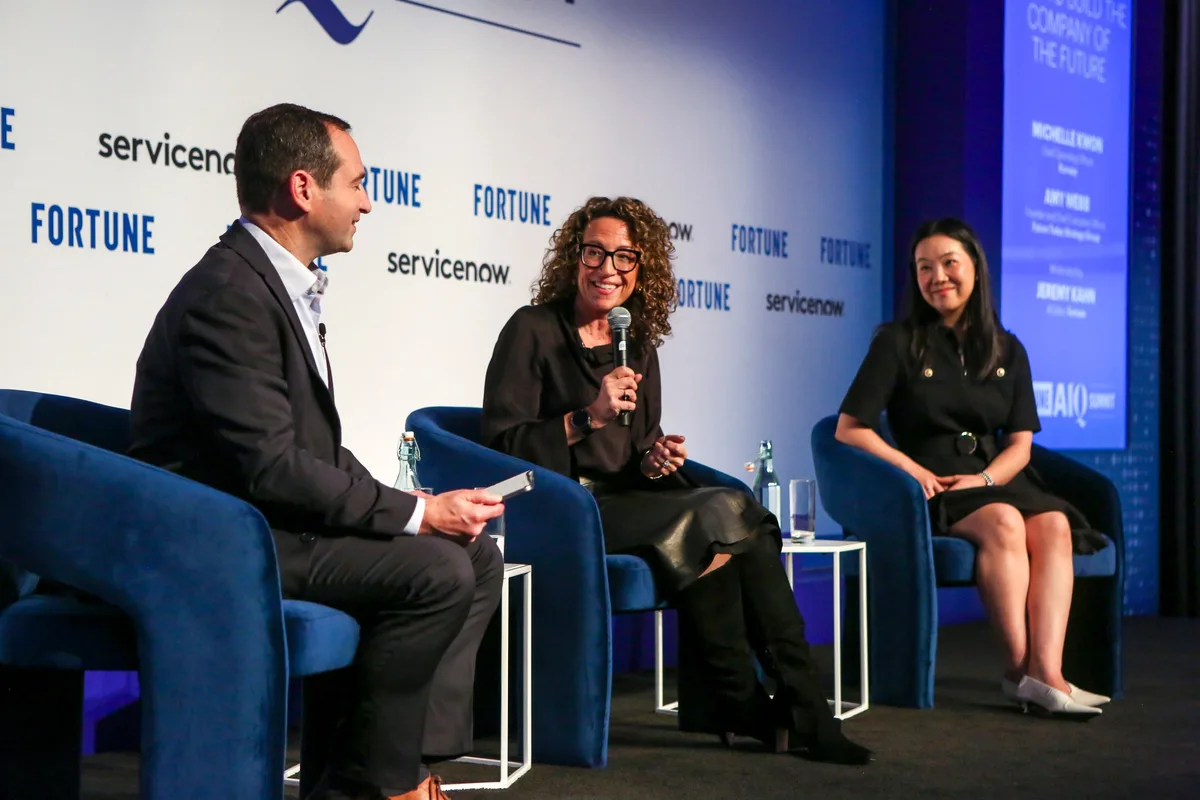
As companies race to adopt generative AI, agents, and new data tools, leaders face a more demanding question than whether to use the technology: How can they turn it into measurable value without creating new costs, risks, and organizational confusion? At Fortune’s AIQ Summit at the New York Stock Exchange, executives from the technology, finance, industrial operations, travel, and human resources sectors explored what separates meaningful AI transformation from scattered pilots.
The discussion made clear that the strongest companies are not simply distributing AI tools.
They are redesigning workflows, developing talent, strengthening governance, and building the data and operating discipline needed to scale responsibly.
Together, we explored these key trends: Moving from experimentation to enterprise transformation Building an AI-ready workforce Managing governance, trust, and risk Applying AI in physical and regulated environments Measuring ROI, controlling costs, and creating growth From AI adoption to AI transformation THE MOST IMPORTANT AI QUESTION IS NOT WHETHER A COMPANY HAS DEPLOYED TOOLS, BUT WHETHER IT HAS CHANGED HOW WORK GETS DONE.
Speakers warned that widespread access to AI does not necessarily create productivity, business value, or organizational maturity.
Diana David, Director of Futures at ServiceNow , said leading companies distinguish themselves through their commitment to people and operational discipline, not technology alone.
In ServiceNow’s Enterprise AI Maturity Index, 57% of “pacesetters” invest in ongoing AI upskilling, compared with 4% of other organizations.
The widest gap involves attracting, hiring, and retaining AI talent: 68% of pacesetters do so, compared with 10% of other companies.
“Talent investment.
That was the biggest gap,” David said.
David cautioned against treating broad employee access to AI as proof of success.
“95% of everybody has X, Y, Z,” she said.
“But it is not translating into productivity, and it’s often not with training, and that doesn’t equal maturity.” The work, she argued, begins with leadership, a clear vision, transparent systems, the right data foundation, and iterative redesign of specific workflows.
Paul Fipps, President of Global Customer Operations at ServiceNow, made a related point: the greatest gains will not come from automating old processes faster, but from rebuilding them around new capabilities.
5News aggregated this summary from the outlet’s public feed. The full article, with all the context, is on fortune.com — the content belongs to Fortune.