EU says trade deal could cut up to 50% of Chinese EV and plug-in hybrid imports and lower tariffs for some European exports to China
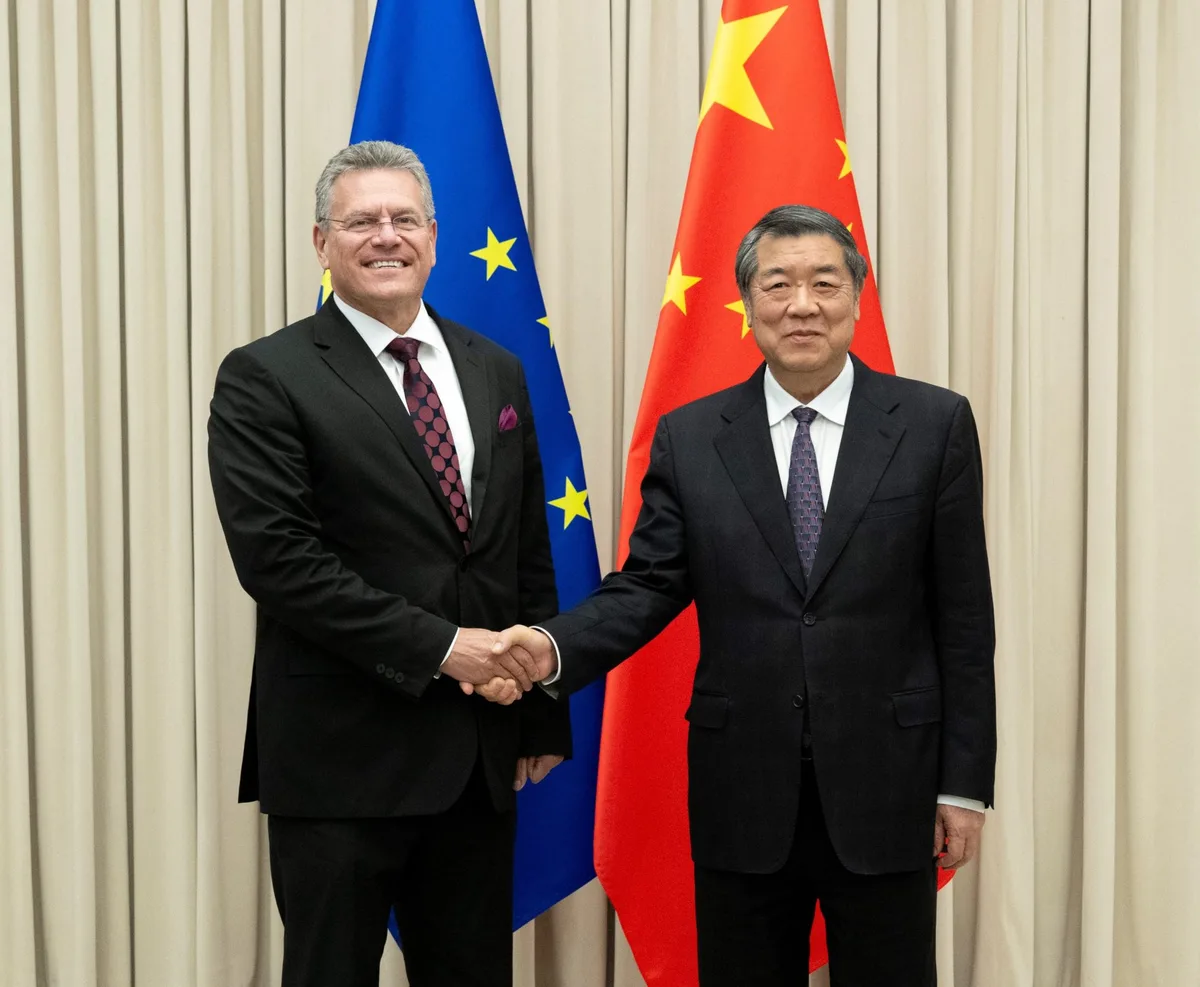
The top trade envoys for China and the European Union agreed Friday on a broad initial deal following two days of talks aimed at calming escalating tensions over trade imbalances, the EU trade commissioner said.
Neither side provided clear details on the preliminary deal, but European Commissioner for Trade Maros Sefcovic said it includes lower tariffs for some European goods to China as well as measures to stabilize rare earth supply chains.
The EU trade envoy said the deal could cut up to 50% of Chinese electric and plug-in hybrid vehicle imports to the EU and could lower tariffs on products benefiting “almost every” EU nation.
The deal would require approval from leaders across the 27-nation EU.
He said that “by this step we are actually preventing several millions of car exports from China to the European Union.” The two sides were seeking to resolve key factors behind China’s growing trade surplus, which hit 360 billion euros ($403 billion) last year.
China’s Commerce Ministry posted online that Chinese Commerce Minister Wang Wentao expressed concerns about the EU’s recent restrictive measures.
He said that China is not the root of the EU’s problems but a partner in solving them.
The head of the European Automobile Manufacturers’ Association, Sigrid de Vries, said that the deal appears to avert further instability in the EU and “can help facilitate the transition to a new era of Chinese presence in the European market in an orderly way and this is in the long-term interests of all parties.” Sefcovic said he will brief EU leaders meeting in Brussels next week and seek their approval.
“They would have to see that this is convincing enough to take the other steps,” he said.
“We are in a situation that they (China) could put under the threat whole sectors in the European industry, literally thousands of jobs and the public opinion and the leaders clearly expect very fast action from our side.” Sefcovic also said both sides reached understandings to further facilitate China’s export licensing for rare earths and permanent magnets, as well as to improve access to the Chinese market for various EU products through lower most-favored-nation tariffs, including car parts, olive oil and footwear, totaling almost 4 billion euros (about $4.5 billion) in current export value.
The two sides will meet next by video in January and then in person in March.
Growing tensions China has been pushing for the EU to stop blocking Chinese imports of advanced computer chipmaking machines, restrictions imposed on national security grounds at Washington’s behest.
Earlier, Sefcovic had said the talks this week were the culmination of three months of intensive work.
He had set an October deadline for meaningful results on trade rebalancing.
5News aggregated this summary from the outlet’s public feed. The full article, with all the context, is on fortune.com — the content belongs to Fortune.