A Freedom 250 Event That Actually Worked
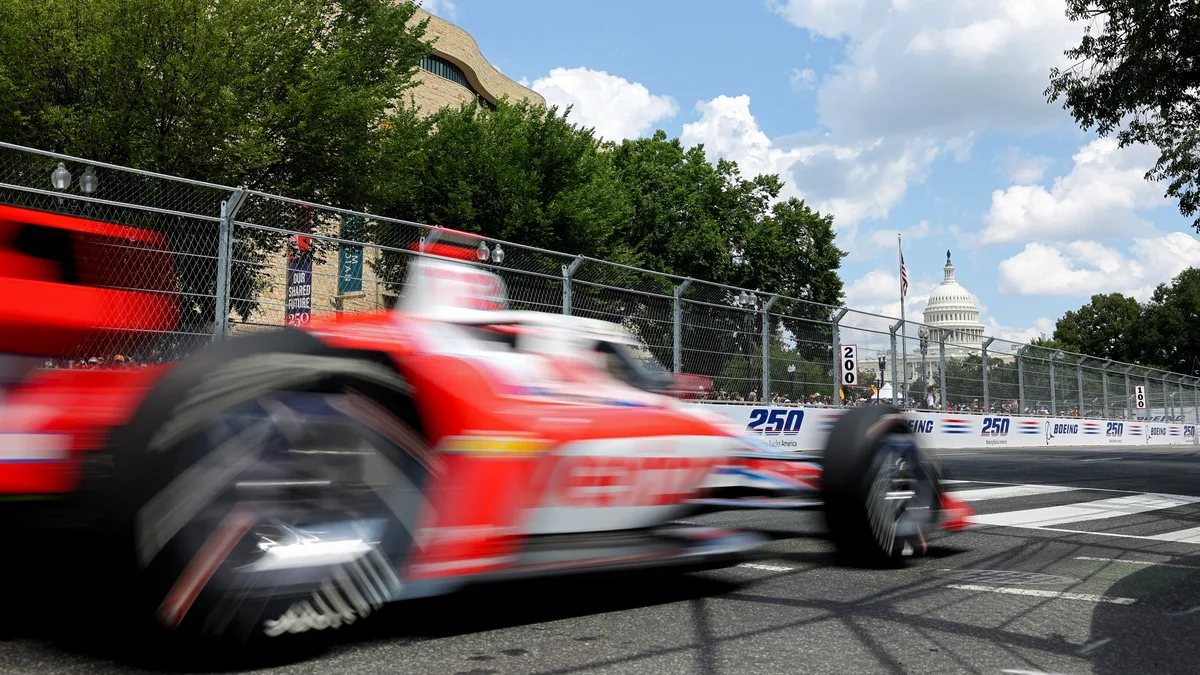
An interest in the thrills of car racing is not what drove me to spend my Sunday afternoon at the Freedom 250 Grand Prix, the latest of the spectacles that Donald Trump has presided over during the United States’ big birthday celebrations all summer.
I was there yesterday because I was worried about art.
The event involved 25 cars zipping around a number of D.C.’s museums and historic buildings at worryingly high speeds— 147 times .
Preservationists and conservators had raised concerns ahead of the contest, leading me to imagine creaking sculptures and rattling ceramics, all because the president wanted a race around the National Mall.
Seeing the National Gallery of Art’s huge black Alexander Calder sculpture outside, surrounded by wood boards as if the poor thing were hunkering down for war, didn’t help.
But it turns out that playing art patrol is rather difficult at an IndyCar race, especially when you find yourself crammed into a sweaty crowd as blurs of color whiz by.
This proximity to the action means you are a participant in a much more visceral way than at many other sporting events: You can feel the vibrations in your toes.
Somewhere among the vroom s, I realized that this was not like the other Freedom 250 productions I had attended, like the Great American State Fair with its drab triumphal arch and the Freedom Trucks with their selective history.
Instead, in some moments, the Grand Prix was … fun? The good vibes began when I spotted the driver Sting Ray Robb’s maintenance truck, decorated with the ridiculously wholesome image of seven puppies climbing on his race car.
He immediately gained a fan in me, though he crashed early on.
The course, with its many bumps, was tricky for drivers, and just more than half of them even finished.
Kyle Kirkwood, another American, won.
Many might be tempted to slot the IndyCar race next to other Trumpian events that have disrupted life in the nation’s capital.
More than that, the race could easily serve as another example of how little an administration that has pressured museums and diluted historic-preservation laws cares for the nation’s cultural heritage.
5News aggregated this summary from the outlet’s public feed. The full article, with all the context, is on www.theatlantic.com — the content belongs to The Atlantic.