This transplant surgery could save countless lives. Why aren’t we doing more of them?
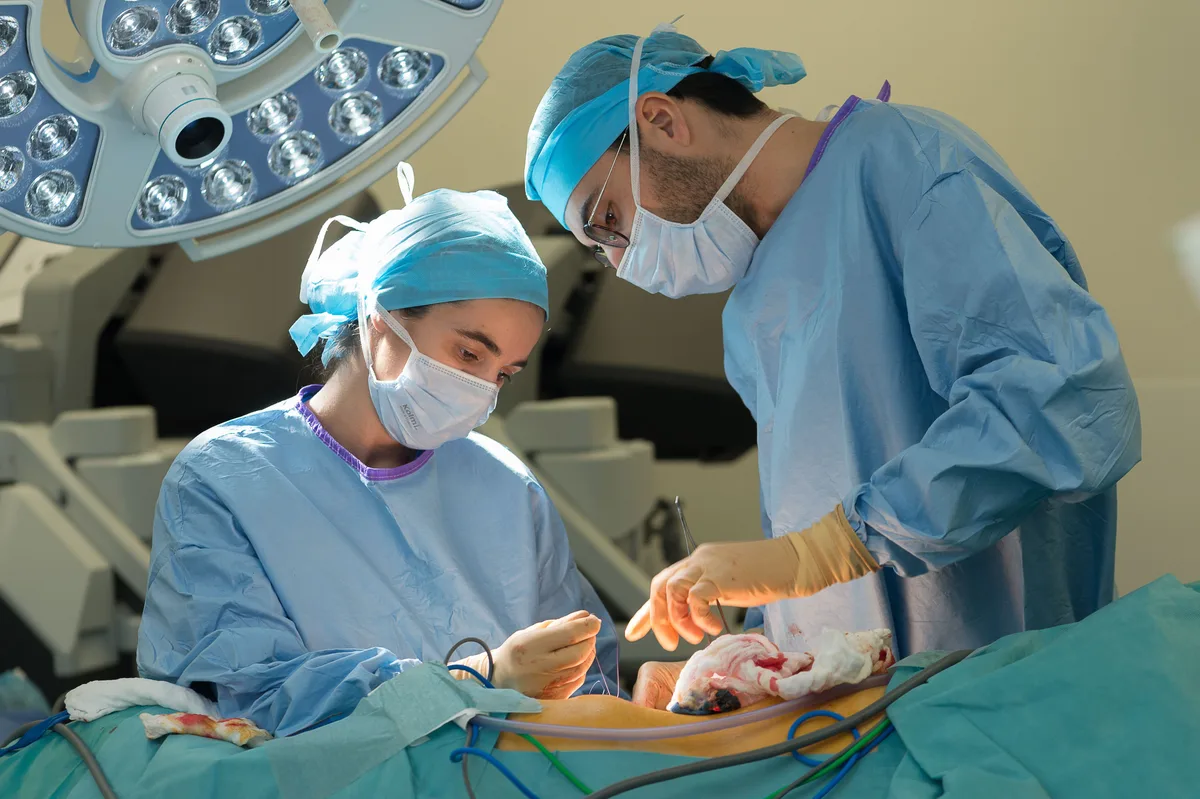
Physicians perform a kidney transplant. | BSIP/Universal Images Group via Getty Images In an episode from the fifth season of Grey’s Anatomy , Miranda Bailey, played by Chandra Wilson, orchestrates an ambitious 12-person paired kidney transplant surgery.
Six living donors each give one of their kidneys to a stranger and six recipients receive one in return.
While the show, which is still on the air almost 18 years later, often blurs the line between fact and fiction, this particular form of kidney transplant, called a paired kidney exchange chain, has become increasingly common in the United States.
Key takeaways Kidneys and livers, two organs that a living donor can donate, account for more than 90 percent of the demand on the US organ waiting list.
More living liver donors could help close a critical gap, just as they did for kidneys.
We currently don’t have systems in place, such as a national registry, to implement a strong living donor liver transplant system.
New organ preservation technology, universal protections for living donors, and broader surgical training could help us change that.
Rewatching the show (sue me), I wondered if such donation chains are viable for other organs (or tissues ) that can be donated by living donors.
The liver, the only organ that can regenerate itself over a span of six to eight weeks, struck me as a particularly notable candidate.
As with any surgical procedure, donating part of one carries some risk, but in most cases a person can safely continue to lead a healthy life afterward.
And the need for them far exceeds what deceased donors can provide.
Right now, there are more than 100,000 people on the waitlist for organs.
Over the past decade, using organs from living donors to meet organ demand has emerged as a particularly effective strategy.
In 2025, around 24 percent of kidney transplants used living donors, according to preliminary data from the Organ Procurement and Transplantation Network (OPTN), the public-private partnership responsible for maintaining equitable organ allocation policies.
5News aggregated this summary from the outlet’s public feed. The full article, with all the context, is on www.vox.com — the content belongs to Vox.