Cage-free eggs are likely worse for the climate. The answer isn’t to switch back to caged ones.
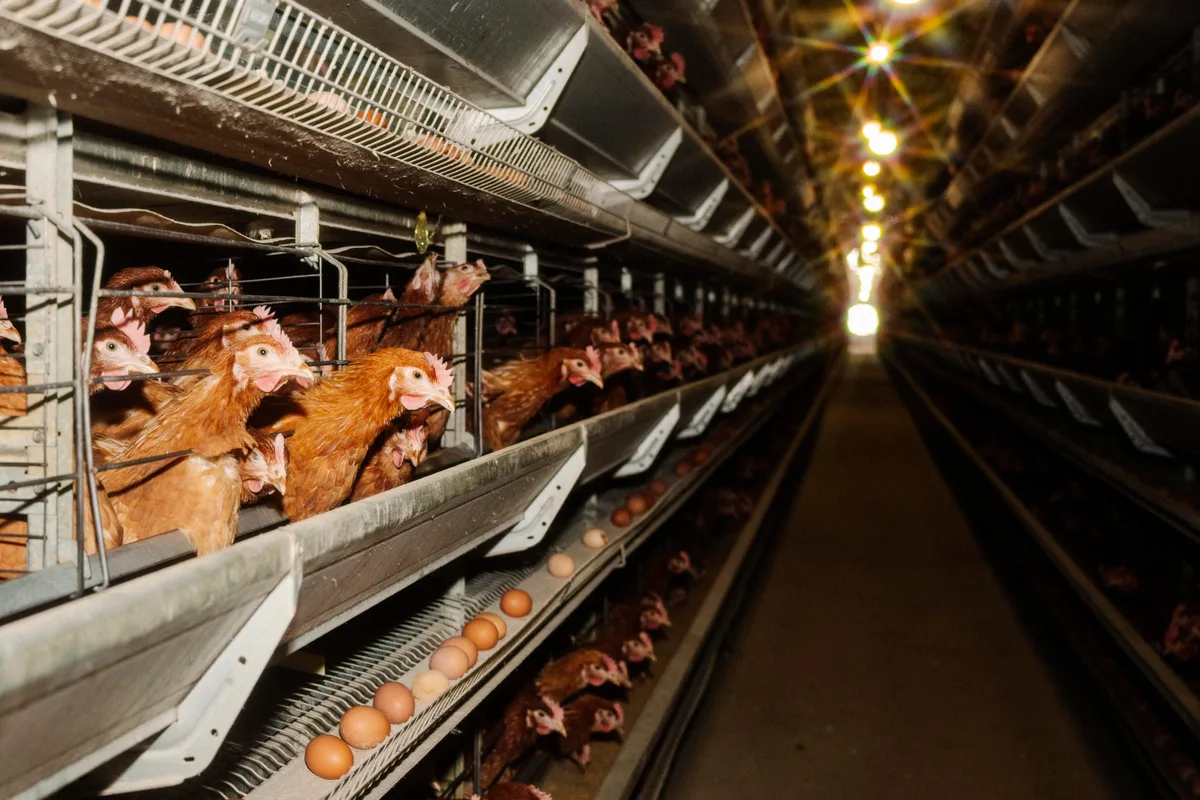
Egg-laying hens in a typical battery cage facility. | Getty Images Popular conceptions of farming tend to associate good animal welfare with environmental virtue — an intuition so strong that researchers have described a “ humane halo ” effect, where consumers who are told that a farm uses better environmental practices also assume that it treats its animals well.
So it might come as a surprise to hear that one way of making eggs better for the planet might be to make life a whole lot worse for the chickens who lay them.
This, anyway, was the apparent upshot of a controversial and widely discussed new paper on the environmental impacts of different egg farming systems.
Cage-free, free-range, and organic eggs, it found, are higher in greenhouse gas emissions, land use, and other environmental harms than confining hens in tiny cages.
Consider the implications of that result: At any given moment, more than 8 billion egg-laying hens inhabit farms across the planet.
The vast majority of them live in wire cages that severely restrict basic movements like spreading their wings and turning around.
They barely have room to move around at all, which can induce depression-like states .
“Hens represent the largest population of terrestrial animals housed in cages throughout their lives,” as the new study puts it .
In animal agriculture, there is an unfortunate and well-known trade-off between environmental impact and animal welfare because, all else equal, animals who are allotted a bit more room to roam and express natural behaviors take up more resources. (Of course, that trade-off disappears if we simply replace animal products with plants.) That is why almost all animal products these days are produced on factory farms in the first place — factory farming doesn’t exist merely to be evil, but rather because it’s efficient, and the cost of efficiency is borne by the animals.
Inside this story A new study found that eggs from caged hens have a smaller environmental footprint than cage-free eggs.
But critics say the study relies on outdated data and may exaggerate the climate gap.
Cage-free farming is far from cruelty-free, but it gives hens substantially more freedom than extreme confinement in cages.
And eggs account for such a small share of global emissions that the climate cost of going cage-free is relatively minor.
The bigger issue is what happens when we treat carbon efficiency as the ultimate arbiter of our values.
5News aggregated this summary from the outlet’s public feed. The full article, with all the context, is on www.vox.com — the content belongs to Vox.