China has too much green energy. Experts think AI can fix that
Ever since the U.S.-Iran war choked the Strait of Hormuz, Asian importers have scrambled for new sources of oil and LNG to keep the lights on.
Yet China’s energy companies are reckoning with an entirely different problem: They have too much power.
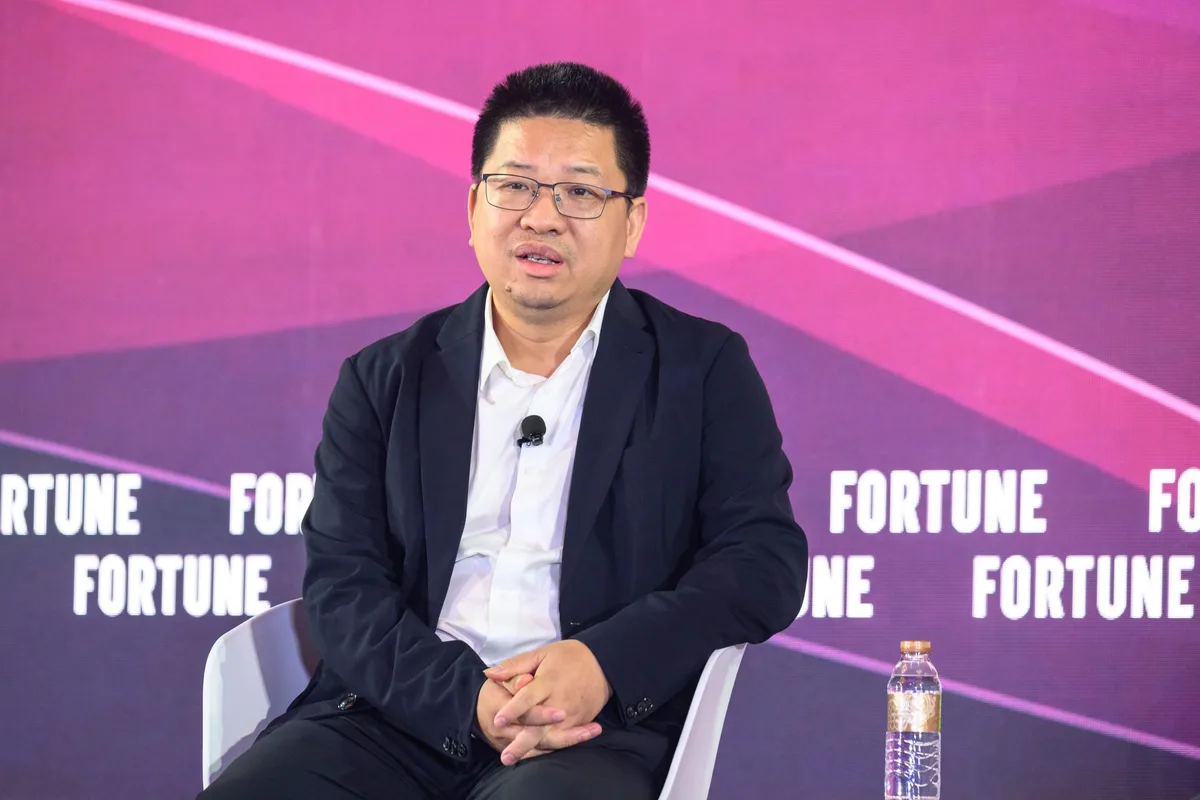
“China’s grid is a very strong and stable one,” Youyuan Huang, executive vice chairman of BTR New Material Group, the world’s top maker of battery anode materials, said at the Fortune Leaders Forum in Macau on Sept.
8.
“But we’ve installed too much green energy.” China will account for 60% of all installed renewable capacity through 2030, according to the International Energy Agency.
In July, solar overtook coal as China’s largest source of installed power capacity.
Daniel Liu, vice president of solar module giant Jinko Solar, said renewables effectively covered all of China’s electricity demand growth last year.
Yet production in the country’s clean energy sector has grown so much that there’s more energy infrastructure than the market needs.
Panelists at the Forum had an unlikely answer to the problem of energy overcapacity: AI.
AI, for one, requires a large and steady supply of energy.
“[Energy] guarantees the safety and stability of computing power,” notes Huang.
“With the development of GPUs, the power of a single chip has risen dramatically…This means that if the power drops, [large amounts of] data that’s being computed could be lost.” Jiangxing Intelligence , a physical AI firm, has developed an AI ‘brain’ that monitors environmental conditions around renewable energy infrastructure to ensure electricity is collected and stored prudently.
The ‘brain’ also controls a suite of autonomous robots, which help with the inspection and maintenance of solar panels and wind turbines.
“The supply of wind and solar energy is highly uncontrollable…at night there’s no sunlight, but during the day sunlight floods in,” said Haitian Pang, the founder and CEO of Jiangxing Intelligence.
5News aggregated this summary from the outlet’s public feed. The full article, with all the context, is on fortune.com — the content belongs to Fortune.